Smart Wardrobe 2026: Building Quality on a $500 Budget

In an era where fast fashion often dictates trends and consumption, the idea of building a high-quality, sustainable wardrobe on a modest budget might seem like a distant dream. However, as we look towards 2026, the landscape of fashion is shifting. Consumers are becoming more conscious, valuing longevity, ethical production, and timeless style over fleeting trends. This comprehensive guide will show you exactly how to achieve a smart wardrobe budget of $500 without compromising on quality or personal style. It’s not just about saving money; it’s about investing wisely in pieces that will serve you for years to come, reducing your environmental footprint, and cultivating a distinct personal brand.
The challenge of creating a versatile and durable wardrobe with a limited budget is an exciting one. It forces creativity, encourages thoughtful purchasing decisions, and ultimately leads to a more satisfying and sustainable approach to fashion. Forget the notion that high quality equals high price; with the right strategies, you can curate a collection of garments that are both stylish and built to last, all within your $500 limit. This article will delve into the core principles of smart shopping, identifying key pieces, understanding material quality, and leveraging various resources to maximize your budget.
The Philosophy Behind a Smart Wardrobe Budget
Before we dive into the practical steps, it’s crucial to understand the underlying philosophy. A smart wardrobe budget isn’t just about frugality; it’s about intentionality. It’s about moving away from impulse buys and towards a curated collection that reflects your values and lifestyle. In 2026, this means embracing sustainability, ethical sourcing, and the concept of a capsule wardrobe. It’s about asking: “Do I truly need this? Will it last? Is it versatile? Is it ethically made?”
This approach requires a shift in mindset. Instead of chasing trends, you’ll be building a foundation of timeless pieces that can be mixed and matched to create numerous outfits. This not only saves money but also reduces decision fatigue and contributes to a more organized and stress-free daily routine. The goal is to maximize the utility and lifespan of each item, making every dollar count towards a truly smart wardrobe budget.
Defining Your Personal Style and Needs
The first step in any successful wardrobe overhaul, especially on a budget, is to define your personal style and assess your current needs. What kind of clothes do you genuinely enjoy wearing? What colors and silhouettes make you feel confident? What does your daily life demand – professional attire, casual comfort, athletic wear, or a mix of everything? Take an honest look at your existing wardrobe. What do you wear most often? What pieces are neglected? Understanding this will prevent you from buying items you don’t need or won’t wear, a common pitfall that quickly eats into any budget.
Consider your lifestyle in 2026. Are you working from home, commuting to an office, or frequently traveling? Your clothing needs will vary greatly depending on these factors. A clear understanding of your personal style and practical requirements is the bedrock of a truly smart wardrobe budget.
Auditing Your Existing Wardrobe: The Foundation of Your Smart Wardrobe Budget
Before spending a single dollar, perform a thorough audit of your current clothes. This step is critical for identifying gaps, eliminating clutter, and understanding what you already own. Take everything out of your closet and drawers. Yes, everything. Create three piles:
- Keep: Items you love, wear regularly, and that fit well.
- Repair/Alter: Items you love but need a minor fix (a missing button, a small tear, a hem adjustment). Don’t discard these – a small investment in repair can save you from buying new.
- Donate/Sell/Discard: Items that don’t fit, are worn out beyond repair, or no longer align with your style. Be ruthless! The less clutter you have, the clearer your vision for a smart wardrobe budget becomes.
This audit will give you a clear picture of what you actually possess and what essential pieces are missing. It prevents duplicate purchases and ensures your $500 goes towards filling genuine needs rather than adding to an already overflowing closet.
Creating a Wishlist and Essential Items Checklist
Once your audit is complete, create a detailed wishlist of items you need. Think about versatile pieces that can be dressed up or down. Focus on foundational items first. For a smart wardrobe budget of $500 in 2026, consider these essentials:
- Bottoms (2-3 items): High-quality denim jeans (dark wash, straight leg), versatile black trousers, a comfortable but stylish skirt or additional pair of well-fitting pants.
- Tops (3-4 items): White t-shirt, black t-shirt, a neutral-colored long-sleeve top, a versatile blouse/button-down shirt.
- Outerwear (1-2 items): A classic trench coat or a durable denim jacket, a simple cardigan.
- Dresses/Jumpsuits (1-2 items): A little black dress (or a similar neutral, versatile dress), a comfortable jumpsuit.
- Shoes (1-2 items): Comfortable, versatile sneakers, classic loafers or ankle boots.
- Accessories (minimal): A versatile belt, a simple scarf, perhaps one statement piece of jewelry.
Remember, these are suggestions. Tailor this list to your personal style and needs. The key is versatility and quality. Each item should ideally be able to be worn in at least three different ways or with three different outfits to maximize your smart wardrobe budget.
Strategizing Your Shopping: Where to Find Quality on a Budget
Now that you know what you need, the next step is to strategize where and how to shop to maximize your $500. This is where the ‘smart’ in smart wardrobe budget truly comes into play. Forget retail therapy in traditional malls; in 2026, the savvy shopper looks elsewhere.
1. Second-Hand and Vintage Stores
This is arguably the most powerful tool for a smart wardrobe budget. Second-hand stores, consignment shops, and vintage boutiques are treasure troves of high-quality, often designer, items at a fraction of their original price. Many pieces found here are made from superior materials and construction methods compared to modern fast fashion. Look for items with tags still on, or those that show minimal signs of wear.
Online platforms like ThredUp, Poshmark, Depop, and The RealReal have revolutionized second-hand shopping, offering a vast selection from the comfort of your home. You can filter by brand, size, material, and even condition, making it easier to find exactly what you’re looking for. This approach not only saves money but is also incredibly sustainable, giving clothes a second life and reducing textile waste.
2. Outlet Malls and Clearance Sections
While not as sustainable as second-hand, outlet malls and clearance sections can offer significant discounts on new items. The trick here is to be discerning. Don’t be swayed by a low price if the item isn’t exactly what you need or isn’t made from quality materials. Focus on your wishlist. Look for classic styles that won’t go out of fashion quickly. Be wary of “made for outlet” lines, which can sometimes be of lower quality than their main-line counterparts.
3. Sales and Seasonal Discounts
Timing your purchases around major sales events (Black Friday, end-of-season sales, holiday sales) can yield substantial savings. Plan ahead for these periods, keeping your wishlist in mind. Subscribing to newsletters from your favorite ethical brands can also alert you to upcoming sales. However, exercise caution: only buy what you truly need and what fits into your smart wardrobe budget. Sales can be tempting traps for impulse buying.
4. Ethical and Sustainable Brands (on Sale or with Loyalty Programs)
Many ethical and sustainable brands, while often having higher upfront costs, offer sales or have loyalty programs. Investing in one or two key pieces from these brands, if you can find them discounted, can elevate your entire wardrobe. These items are typically made with better materials and under fair labor conditions, ensuring they last longer and align with your values. Always check their return policies and customer reviews.
Understanding Quality: Making Your Money Count
The core of a smart wardrobe budget is choosing quality over quantity. A $20 t-shirt that lasts for years is a better investment than a $5 t-shirt that falls apart after a few washes. But how do you identify quality?
Material Matters
- Natural Fibers: Prioritize natural fibers like cotton (organic if possible), linen, wool (merino, cashmere), silk, and hemp. These materials are generally more durable, breathable, and feel better against the skin. They also tend to age more gracefully than synthetics.
- Avoid Cheap Synthetics: While some modern synthetics can be high-performing (e.g., recycled polyester for activewear), cheap polyester, acrylic, and rayon often pill, lose shape, and don’t breathe well. They also contribute to microplastic pollution.
- Blends: Some blends can be good, especially for added stretch or durability (e.g., cotton with a small percentage of elastane). However, be wary of blends where cheap synthetics dominate.
Construction and Craftsmanship
Take a moment to inspect garments, even if you’re shopping online (read reviews carefully):
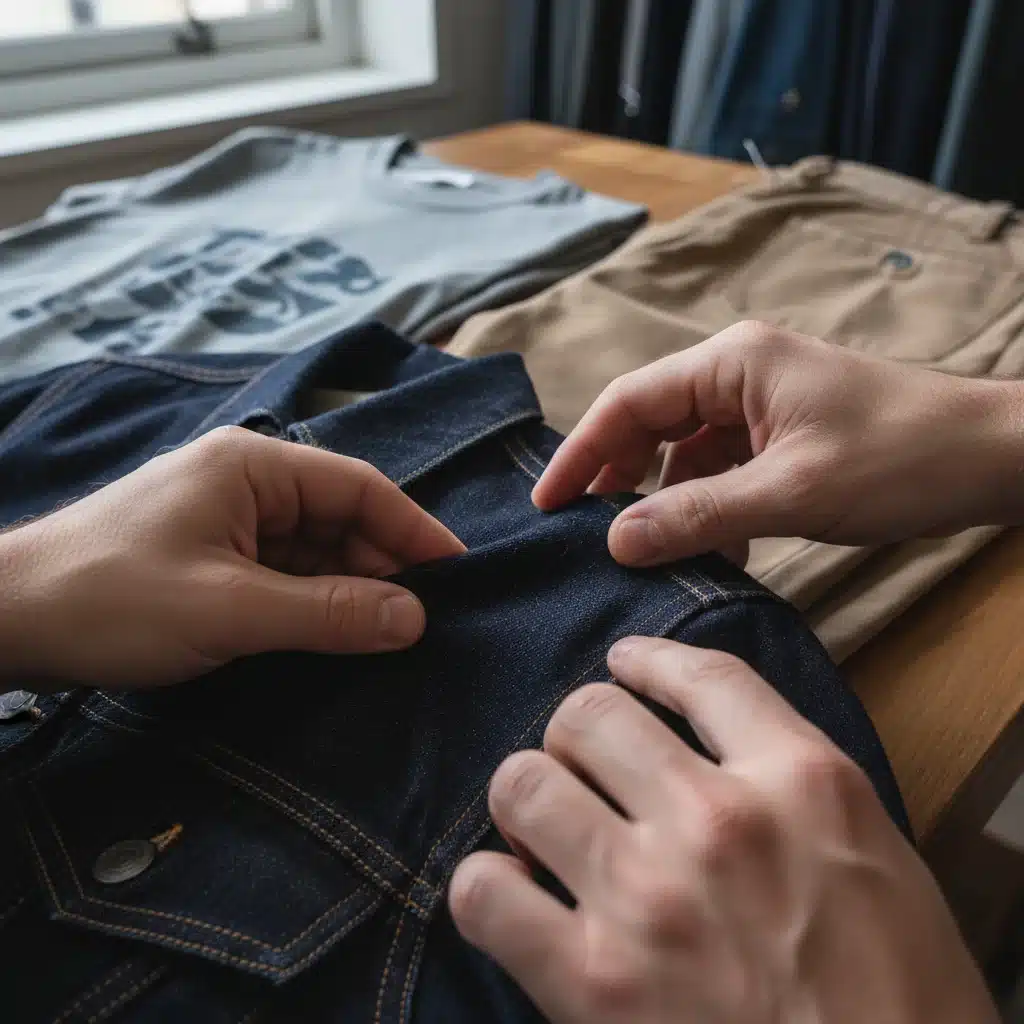
- Stitching: Look for even, tight, and consistent stitching. Loose threads or uneven seams are red flags. Double-stitching in high-stress areas (armholes, crotch) indicates durability.
- Seams: Seams should lie flat and not pucker. French seams (where the raw edge is enclosed) are a sign of high quality.
- Buttons and Zippers: Buttons should be securely sewn on, preferably with a shank. Zippers should be sturdy (YKK is a good sign) and glide smoothly without snagging.
- Lining: A good lining adds to the garment’s longevity, drape, and comfort. It should be well-fitted and made of a breathable material.
- Fabric Weight and Drape: Hold the fabric up to the light. Does it look flimsy or substantial? Does it drape nicely or feel stiff and cheap?
Learning these details empowers you to make informed decisions and ensures every item purchased contributes positively to your smart wardrobe budget.
Maximizing Your $500: Practical Budgeting Tips
Sticking to a $500 budget requires discipline and smart allocation. Here’s how to make your money go further:
1. Set a Strict Spending Limit Per Item Category
Break down your $500. For example:
- Bottoms: $150 (e.g., $75 for jeans, $75 for trousers)
- Tops: $100 (e.g., 4 tops at $25 each)
- Outerwear: $100
- Shoes: $100
- Accessories: $50
Adjust these figures based on your specific needs, but having a clear limit for each category prevents overspending on one item and neglecting another essential. This structured approach is key to maintaining a smart wardrobe budget.
2. Embrace the ‘Cost Per Wear’ Metric
Instead of looking at the upfront price, consider the cost per wear. A $75 pair of high-quality jeans that you wear 100 times costs $0.75 per wear. A $20 trendy top that you wear 5 times costs $4 per wear. Investing in durable, versatile pieces that you’ll wear frequently is always the more economical choice in the long run, even if the initial price seems higher. This metric is a cornerstone of a truly smart wardrobe budget.
3. Learn Basic Mending and Care
Extending the life of your clothes directly saves money. Learning to sew on a button, mend a small tear, or adjust a hem can keep garments out of the landfill and in your wardrobe. Proper care – washing according to instructions, air-drying delicate items, storing clothes correctly – also preserves their quality and appearance, making your smart wardrobe budget stretch further.
4. DIY and Upcycling
Don’t underestimate the power of DIY. Can an old pair of jeans be cut into shorts? Can a simple dress be dyed a new color? Upcycling can transform existing pieces into fresh additions, reducing the need to buy new and keeping your $500 intact. This creative approach also adds a unique, personal touch to your style.

Building a Capsule Wardrobe with Your Smart Wardrobe Budget
The concept of a capsule wardrobe is perfectly aligned with a smart wardrobe budget. A capsule wardrobe is a collection of a few essential items of clothing that don’t go out of fashion, which can then be augmented with seasonal pieces. The goal is to have a versatile collection that can be mixed and matched to create a wide variety of outfits with minimal effort.
With your $500 budget, focus on purchasing the core, foundational pieces first. Think neutral colors (black, white, grey, navy, beige) that pair easily with each other. Once you have these high-quality basics, you can then consider adding a pop of color or a unique print with a single, carefully chosen accessory or top, if your budget allows. This method ensures that every item you buy is a workhorse in your wardrobe, maximizing your investment.
Example of a $500 Smart Wardrobe Budget Breakdown (Illustrative)
Let’s imagine a practical allocation for a versatile, high-quality wardrobe:
- High-Quality Dark Wash Jeans (Second-Hand/Sale): $60
- Black Tailored Trousers (Second-Hand/Sale): $50
- White Organic Cotton T-shirt (Ethical Brand Sale): $30
- Black Long-Sleeve Top (Second-Hand): $25
- Versatile Blouse/Button-Down (Second-Hand/Clearance): $40
- Classic Trench Coat/Denim Jacket (Second-Hand): $70
- Comfortable White Sneakers (Sale): $60
- Black Loafers/Ankle Boots (Second-Hand): $50
- Neutral Knit Cardigan (Second-Hand): $35
- Little Black Dress/Versatile Dress (Second-Hand): $50
- Total: $470
This leaves $30 for potential alterations, a versatile belt, or a high-quality scarf. This example demonstrates that with careful planning and smart shopping, a high-quality, foundational wardrobe is entirely achievable within a $500 smart wardrobe budget.
The Long-Term Benefits of a Smart Wardrobe Budget
Beyond the immediate financial savings, adopting a smart wardrobe budget approach offers numerous long-term benefits:
- Sustainability: By choosing fewer, higher-quality items and embracing second-hand, you significantly reduce your contribution to textile waste and the environmental impact of fashion production.
- Timeless Style: Investing in classic, well-made pieces means your wardrobe won’t feel outdated after a single season. You’ll develop a more sophisticated and enduring personal style.
- Reduced Stress: A curated wardrobe with versatile pieces means less time spent deciding what to wear, less clutter, and a greater sense of confidence in your choices.
- Better Quality: You’ll own clothes that feel better, fit better, and last longer, ultimately providing more value for your money over time.
- Ethical Consumption: By supporting ethical brands (even if only during sales) and choosing second-hand, you’re making a statement against exploitative labor practices and unsustainable manufacturing.
Looking Ahead to 2026 and Beyond
The fashion landscape in 2026 is increasingly leaning towards conscious consumerism. Technology will continue to enhance our ability to find ethical and sustainable options, from AI-powered personal shopping assistants that recommend second-hand items to blockchain tracking of garment origins. Embracing a smart wardrobe budget isn’t just a trend; it’s a future-proof strategy for personal style and responsible living.
It requires patience, research, and a willingness to step away from instant gratification. But the reward is a wardrobe that truly serves you – one that is stylish, functional, sustainable, and built to last, all without breaking the bank. So, take these steps, embrace the challenge, and confidently build your high-quality wardrobe on a $500 budget for 2026 and the years to come.
Conclusion: Your Path to a High-Quality, Budget-Friendly Wardrobe
Building a high-quality wardrobe on a $500 budget in 2026 is not only possible but also a rewarding journey towards more mindful consumption. By understanding your personal style, auditing your current closet, strategically shopping second-hand or during sales, and prioritizing material and construction quality, you can curate a collection of versatile, durable, and stylish pieces. Remember, a smart wardrobe budget is about making informed choices that align with your values and lifestyle, ensuring every dollar spent contributes to a wardrobe you love and that lasts. Embrace the challenge, enjoy the process, and step into 2026 with a wardrobe that is both smart and chic.