Unlock 70% Off: Master Hidden Clearance Sales in US Retailers

Exclusive: How to Find Hidden Clearance Sales Offering 70% Off or More in Major US Retailers
Are you tired of paying full price? Do you dream of snagging incredible deals, but feel like the best discounts are always just out of reach? What if we told you there’s a secret world of savings, where major US retailers quietly slash prices by 70% or even more, making luxury items affordable and everyday essentials a steal? Welcome to the thrilling hunt for hidden clearance sales. This isn’t about waiting for Black Friday or clipping a few coupons; this is about understanding the retail game, knowing where to look, and pouncing when the opportunity strikes. Prepare to transform your shopping habits and become a master of extreme savings.
In this comprehensive guide, we’ll pull back the curtain on the strategies and secrets that savvy shoppers use to consistently find these elusive, deep discounts. We’ll delve into the psychology behind retail pricing, decode clearance tags, and reveal the best times and places to uncover deals that most people miss. From understanding inventory cycles to leveraging technology, you’ll gain an arsenal of techniques to save a significant amount of money on everything from clothing and electronics to home goods and groceries. Get ready to embark on a journey that will not only save you hundreds, if not thousands, of dollars but also turn shopping into an exciting treasure hunt.
Understanding the Anatomy of a Clearance Sale: More Than Just a Red Tag
Before we dive into the specifics of finding hidden clearance sales, it’s crucial to understand what ‘clearance’ truly means to a retailer. Clearance isn’t just about moving old inventory; it’s a strategic process driven by a complex interplay of factors including seasonality, inventory levels, product performance, and even store remodeling plans. Retailers have a finite amount of space, and unsold merchandise represents tied-up capital and lost opportunity for new, higher-margin products. Thus, moving these items, even at a significant loss, becomes a priority.
The Lifecycle of a Discount: From Markdown to Deep Clearance
Most items go through a predictable markdown cycle. They start at full price, then move to a small percentage off (e.g., 10-20%), followed by larger markdowns (e.g., 30-50%), and finally, if they still haven’t sold, they hit the deep clearance phase (60-90% off). The key to finding hidden clearance sales is to intercept items at the latter stages of this cycle, often before they are heavily advertised or even prominently displayed. This is where the real savings lie.
Why ‘Hidden’? The Retailer’s Perspective
Why would a retailer ‘hide’ such great deals? There are several reasons. Sometimes, it’s simply a matter of logistics – a store might have too much inventory to properly display all discounted items. Other times, it’s strategic: retailers don’t want to train customers to always wait for deep discounts, as this would erode their profit margins on regular-priced items. They might also want to maintain an image of offering high-value goods, even if some items are being sold at a loss. This creates a scenario where the best deals require a bit of detective work.
Decoding Price Tags and Retailer Codes: Your Secret Language to Savings
One of the most powerful tools in your arsenal for uncovering hidden clearance sales is learning to read price tags. Many major retailers use internal coding systems that indicate an item’s markdown status, its final price, or even when it’s due for another reduction. This isn’t always publicly advertised, but once you know the codes, you’ll be able to identify potential steals before anyone else.
The ‘Ends in .97’ Rule (Walmart, Target, etc.)
This is perhaps the most famous clearance hack. At many stores, particularly Walmart and Target, items ending in .97 (or .00 at Target) often signify a first markdown. Items ending in .50 or .25 might indicate a second or third markdown, respectively, and are usually closer to the final clearance price. While not a universal rule, it’s a strong indicator worth investigating. An item ending in .03 or .06 at Target, for instance, often means it’s at its lowest possible price and will be removed soon.
Scanning for the Original Price and Markdown Dates
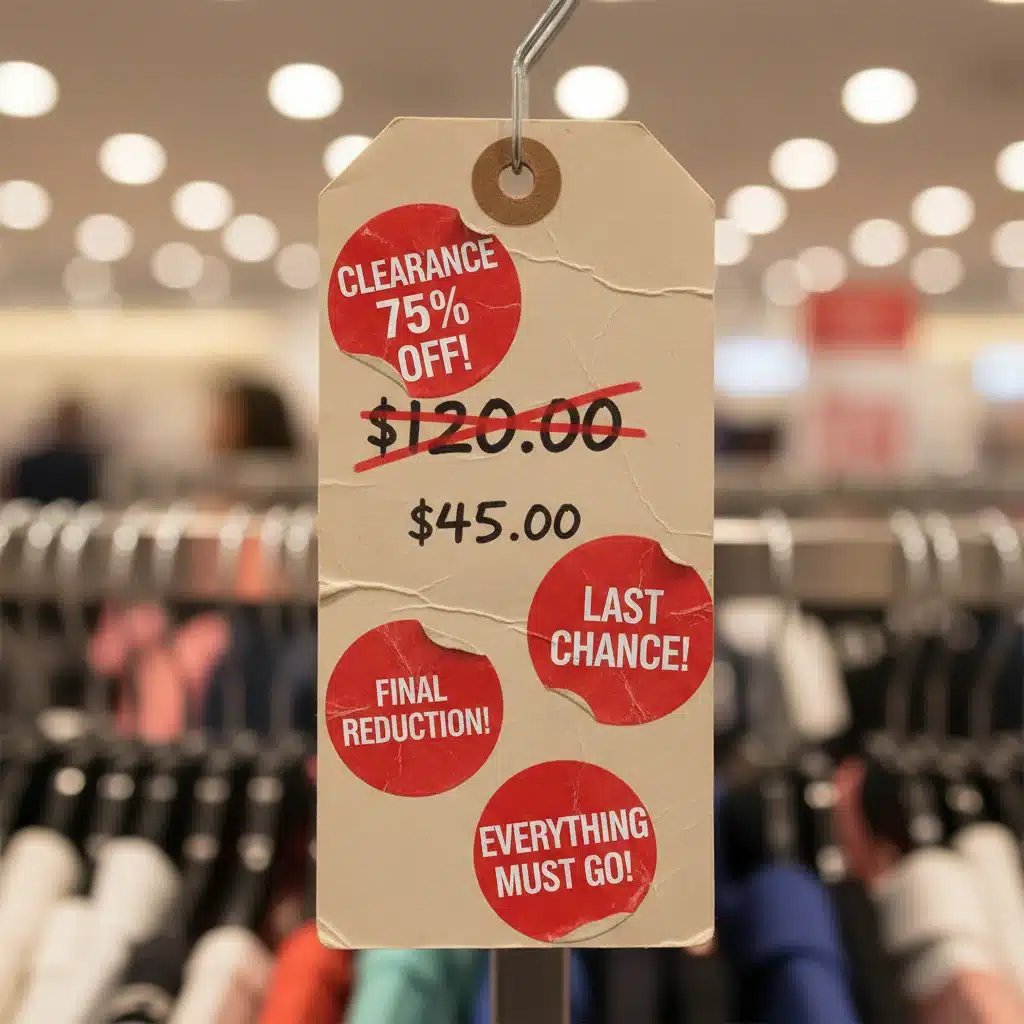
Always look for the original price on the tag, even if it’s crossed out. This helps you calculate the true percentage off. Some tags also include a small date or code indicating when the item was last marked down. This can give you an idea of how long it’s been on clearance and whether it’s due for another reduction soon. If an item has been sitting at the same markdown price for a while, it might be ripe for a deeper discount.
Beyond the Sticker: Using Price Scanners
Never trust the displayed price alone, especially in the clearance aisles. Always use a store’s price scanner (or your smartphone app if available) to verify the current price. It’s common for items to be marked down further than what the physical tag indicates, especially if they’ve been moved from one section to another. This is where many hidden clearance sales are truly ‘hidden’ – the tag hasn’t been updated, but the system price has.
Timing is Everything: Best Days and Seasons for Deep Discounts
The retail world operates on a calendar, and understanding this calendar is key to maximizing your chances of finding hidden clearance sales. Retailers have specific days and seasons when they conduct markdowns, clear out seasonal inventory, or prepare for new collections.
Weekly Markdown Cycles: Mondays, Tuesdays, and Wednesdays
Many major retailers have specific days of the week when they process markdowns. For example, Target often does markdowns on Tuesdays, while Walmart might do them on Mondays or Wednesdays. This isn’t a hard and fast rule for every store or department, but generally, shopping early in the week can give you a better chance of finding newly discounted items before other shoppers. Always check with store employees (discreetly, of course) or online forums for specific store markdown schedules in your area.
Seasonal Clearance: The Big Opportunities
Seasonal transitions are prime times for hidden clearance sales. Think about it: once Christmas is over, all holiday-themed items, decorations, and even certain electronics or clothing associated with the season will be heavily discounted. The same applies to spring, summer, and fall. After major holidays like Valentine’s Day, Easter, Halloween, and Thanksgiving, expect massive markdowns on related merchandise. The sweet spot is usually 1-2 weeks after the holiday, when prices hit their lowest. Also, look for end-of-season sales for clothing, patio furniture, and sporting goods.
Inventory Clear-Outs and Store Remodels
Keep an eye out for news of store remodels or closures. When a store is undergoing significant changes, they often have aggressive clearance sales to reduce inventory quickly. These can be some of the best opportunities to find items at 70% off or more. Similarly, at the end of fiscal quarters or years, retailers might push to clear out inventory to meet financial targets, leading to unexpected price drops.
Where to Look: Unconventional Spots for 70% Off Deals
Finding hidden clearance sales isn’t just about knowing when to shop; it’s also about knowing where to look. Don’t limit yourself to the obvious ‘clearance’ aisles. The best deals are often found in unexpected places.
The Perimeter and End Caps: Retailer Hotspots
Retailers often move clearance items to the perimeter of the store or to end caps (the displays at the end of aisles). These are high-traffic areas where they hope customers will spot a deal. However, sometimes these items are mixed in with regular-priced merchandise, or the signage isn’t clear. Always scan these areas thoroughly.
The ‘Mismatch’ Aisle and Returns Section
At stores like Home Depot or Lowe’s, look for the ‘mismatch’ paint section where customers have returned custom colors, or where a batch was mixed incorrectly. You can often find gallons of perfectly good paint for a fraction of the price. Similarly, many retailers have a dedicated returns section, where items might be slightly damaged, opened, or simply returned by a customer. These can be goldmines for deep discounts, especially if the ‘damage’ is minor or easily fixed.
Online vs. In-Store: The Digital Hunt for Clearance
Don’t forget the power of online shopping for hidden clearance sales. Many retailers have online-only clearance sections that differ from their in-store offerings. Sometimes, items are marked down online before they are in stores, or vice-versa. Always check both. Use filters for ‘clearance’ or ‘sale’ and sort by ‘price: low to high’ to quickly identify the best deals. Some retailers also have ‘open box’ or ‘refurbished’ sections online that offer significant savings.
The Art of the ‘Walk-Through’: Train Your Eye
Develop a habit of doing a quick ‘walk-through’ of your favorite stores. Don’t go in with a specific purchase in mind; instead, train your eye to spot yellow or red tags, end caps that look disheveled (a sign of moved clearance items), or even just items that look out of place. Sometimes, a single discounted item is accidentally placed on a regular shelf, creating a secret deal for the observant shopper.
Leveraging Technology: Apps, Websites, and Price Trackers
In the digital age, technology is your best friend in the hunt for hidden clearance sales. There are numerous apps and websites designed to help you track prices, find coupons, and alert you to deals.
Retailer Apps and Loyalty Programs
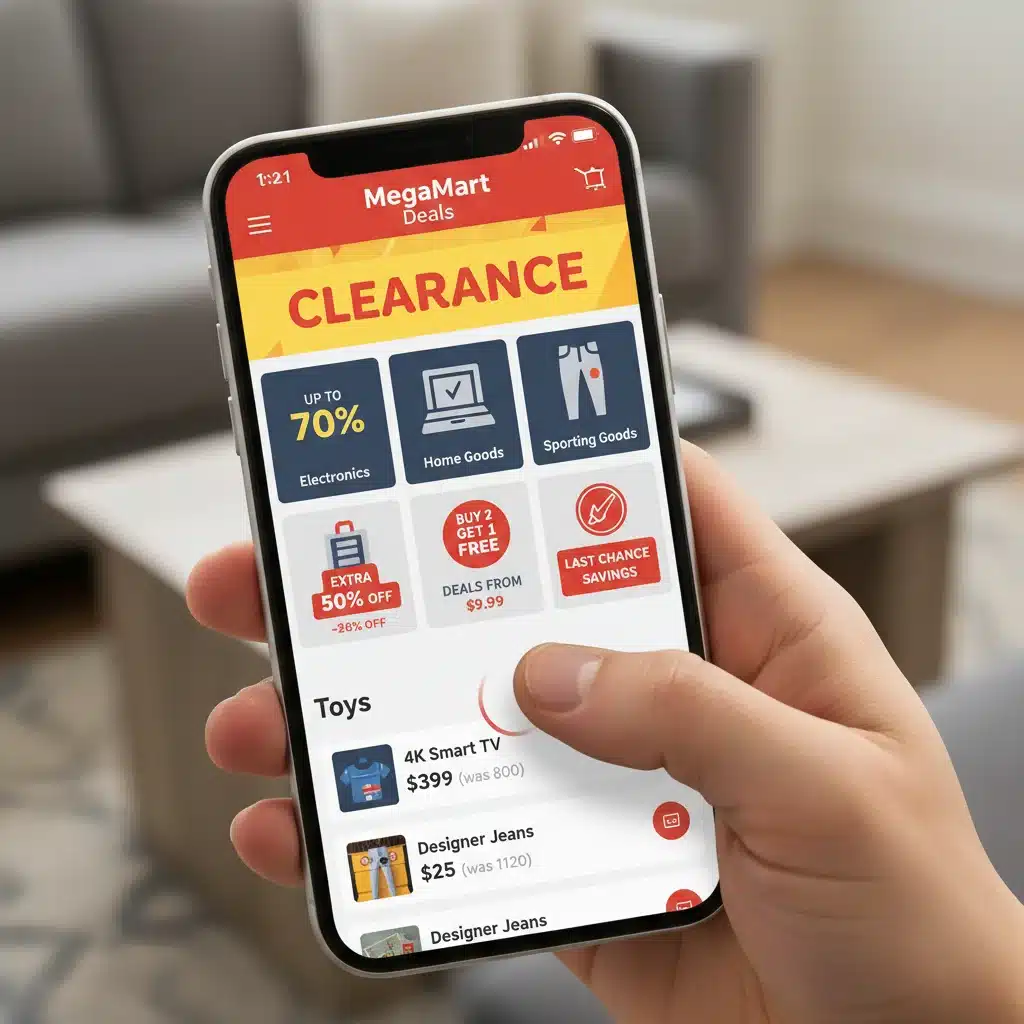
Most major retailers have their own apps. Download them! They often feature app-exclusive deals, digital coupons, and price scanners. Many also have loyalty programs that offer special discounts or early access to sales. Sign up for email lists as well, but be prepared for a lot of emails; create a dedicated ‘deals’ email address if needed.
Price Tracking Websites and Browser Extensions
Websites like CamelCamelCamel (for Amazon), Honey, and Keepa track price history and alert you when an item drops to a desired price. While not strictly for hidden clearance sales, they can help you identify when an online item is at its lowest price point, which often coincides with a clearance event. Browser extensions can also automatically apply coupons at checkout, stacking savings on top of already discounted items.
Online Clearance Forums and Deal Websites
Communities like Slickdeals, RetailMeNot, and various subreddits (e.g., r/clearance, r/frugal) are treasure troves of user-submitted deals. Shoppers actively share their finds, including specific locations of hidden clearance sales. These forums can be incredibly useful for pinpointing exactly which stores and items are currently deeply discounted. Always verify the deal before making a special trip, as stock can vary by location.
The Art of Negotiation: Asking for a Deeper Discount
While not always possible, sometimes you can negotiate an even deeper discount on clearance items, especially if they have minor damage or are the last one in stock. This is a subtle art and requires confidence and politeness.
When and How to Ask
If an item has cosmetic damage, is missing a non-essential part (like packaging), or is the last one remaining and has been on clearance for a long time, politely ask a manager if they can offer a further discount. Frame it as helping them clear inventory. Be prepared for a ‘no,’ but you might be surprised how often a small additional discount (e.g., another 10-20%) can be secured, pushing your savings well past the 70% mark.
Bundling and Bulk Discounts (Even on Clearance)
Sometimes, if you’re buying multiple clearance items, especially small ones, you might be able to negotiate a bundle price. This is more common in smaller, independent stores, but it’s worth a try in larger retailers, especially if you’re dealing with a manager who has some discretion.
Specific Retailer Strategies for Finding 70% Off or More
Each major retailer has its own quirks and strategies when it comes to clearance. Understanding these can give you a significant edge in finding hidden clearance sales.
Target: The ’03’ and ’06’ Rule, and End Caps
As mentioned, Target’s price tags ending in .03 or .06 often signify the lowest possible price before an item is pulled from the shelves. Additionally, Target’s end caps, especially those in the back of the store or in less trafficked aisles (like seasonal, toys after holidays, or home goods), are prime locations for deep discounts. Their app’s barcode scanner is also invaluable for checking current prices.
Walmart: The BrickSeek Advantage and Departmental Markdowns
Walmart’s clearance strategy is often less consistent across stores, but online tools like BrickSeek can be a game-changer. BrickSeek allows you to check local store inventory and prices, often revealing items that are deeply discounted but not yet prominently displayed. Walmart also tends to do heavy markdowns in specific departments at different times, so familiarizing yourself with their weekly ad and department-specific clearance racks is crucial.
Kohl’s: Kohl’s Cash, Rewards, and Stacking Discounts
Kohl’s is famous for stacking discounts. While their initial clearance prices might not always hit 70%, by combining Kohl’s Cash, Yes2You Rewards, and percentage-off coupons, you can often achieve massive savings. Look for their ‘Gold Star’ clearance racks, which often have the deepest markdowns. The key here is patience and understanding their coupon cycles.
Home Depot & Lowe’s: Damaged Goods and Seasonal Overstock
Beyond the paint section, both Home Depot and Lowe’s have dedicated ‘damaged goods’ or ‘return’ areas, usually near the customer service desk or lumber section. Here, slightly dinged appliances, opened boxes of tools, or scratched flooring can be found at incredibly low prices. Also, keep an eye out for seasonal overstock – think grills in late summer, holiday decor after December, or gardening supplies in fall.
Grocery Stores: Manager’s Specials and ‘Best By’ Dates
Even grocery stores have their version of hidden clearance sales. Look for ‘Manager’s Special’ stickers, often found on meat, produce, or bakery items that are nearing their ‘best by’ date but are still perfectly good for immediate consumption or freezing. These can often be 50-70% off. Also, check the end caps for discontinued items or seasonal candy after holidays.
Common Pitfalls to Avoid When Hunting for Clearance
While the thrill of the hunt is exciting, it’s important to approach hidden clearance sales strategically to avoid common mistakes that can negate your savings.
Don’t Buy Just Because It’s Cheap
The cardinal rule of clearance shopping: just because it’s 70% off doesn’t mean you need it. Impulse buys can quickly erase your savings. Only purchase items you genuinely need or would have bought anyway, even if at a higher price. Ask yourself: ‘Would I pay 30% of the original price for this if it wasn’t on sale?’
Check for Damage and Functionality
Clearance items are often discounted because they are damaged, opened, or discontinued. Always thoroughly inspect items for defects, missing parts, or functionality issues before purchasing. If it’s an electronic item, ask if you can test it. Ensure all components are present, especially if it’s a ‘final sale’ item with no returns.
Understand Return Policies for Clearance Items
Many retailers have stricter return policies for clearance or ‘final sale’ items. Make sure you understand these policies before you buy. You don’t want to be stuck with an item you can’t use or return.
Beware of ‘Fake’ Sales or Inflated Original Prices
Some retailers occasionally engage in ‘fake’ sales, where they inflate the original price only to mark it down, making the discount seem larger than it is. This is less common with deep clearance, but it’s always good to have an idea of an item’s true market value before celebrating a ‘deal.’
Becoming a Master of Extreme Clearance Shopping
Finding hidden clearance sales offering 70% off or more is a skill that develops with practice and persistence. It requires a combination of observation, knowledge, and a little bit of luck. By understanding retailer strategies, decoding price tags, leveraging technology, and knowing when and where to look, you can transform your shopping experience from a chore into a rewarding treasure hunt.
Imagine furnishing your home, stocking your pantry, or updating your wardrobe without breaking the bank. These extreme discounts are out there, waiting for the savvy shopper who knows how to find them. So, arm yourself with this knowledge, head out to your favorite retailers, and start uncovering those incredible, elusive deals. Your wallet will thank you!
Final Tips for the Savvy Clearance Hunter:
- Be Patient: The best deals often require waiting for the deepest markdowns.
- Be Persistent: Not every trip will yield a 70% off find, but consistent looking pays off.
- Be Polite: Store employees can be a valuable source of information, but always be respectful.
- Be Prepared: Have your phone ready to scan, check prices, and look up reviews.
- Be Flexible: Sometimes the best deals are on items you hadn’t originally planned to buy.
Happy hunting, and may your shopping bags always be filled with incredible hidden clearance sales finds!