Mastering Price Matching: Get Retailers to Beat Competitor Prices by 10%
In today’s competitive retail landscape, saving money is a top priority for savvy shoppers. While price matching has long been a popular strategy, what if you could do more than just match a competitor’s price? What if you could consistently get retailers to beat it, often by an additional 10% or more? This comprehensive guide will equip you with the ultimate price match strategy, transforming you into a master negotiator and allowing you to unlock significant savings on almost every purchase.
Price matching isn’t just about finding the lowest price; it’s about leveraging retailer policies and understanding the psychology behind sales to your advantage. Many consumers are unaware of the hidden potential within these policies, often settling for a mere match when a beat is entirely possible. Our goal here is to demystify this process, providing you with actionable steps, expert tips, and real-world scenarios to ensure your next shopping trip is not just a success, but a financial triumph.
We’ll delve deep into the intricacies of various retailer policies, identify which stores are most amenable to beating prices, and teach you how to present your case effectively. From understanding the fine print to mastering the art of polite persistence, every aspect of a winning price match strategy will be covered. Prepare to revolutionize your shopping habits and keep more money in your pocket.
Understanding the Landscape: Why Retailers Offer Price Beats
Before diving into the ‘how,’ it’s crucial to understand the ‘why.’ Why would a retailer willingly sell you an item for less than their advertised price, let alone 10% less than a competitor? The answer lies in fierce market competition, customer loyalty, and inventory management. In an era where consumers have instant access to pricing information across countless platforms, retailers recognize that losing a sale over a few dollars can have long-term consequences, including diminished customer loyalty and negative word-of-mouth.
Many major retailers view price matching, and especially price beating, as a customer retention tool. They’d rather take a small hit on a single item’s profit margin than lose your entire purchase, and potentially all future purchases, to a competitor. Furthermore, it saves them the cost of acquiring a new customer, which is often significantly higher than the cost of offering a discount to an existing or potential one. Some retailers also use it to move inventory, particularly for items nearing end-of-life or those with high stock levels.
Understanding these motivations empowers you. It shifts your perspective from asking for a favor to engaging in a mutually beneficial transaction. You’re not just trying to save money; you’re offering the retailer an opportunity to secure your business and uphold their competitive image. This foundational understanding is the cornerstone of an effective price match strategy.
Identifying Retailers with Price Beat Policies
Not all retailers are created equal when it comes to price matching, and even fewer offer a ‘price beat’ guarantee. Your first step in developing a robust price match strategy is to identify which stores have these generous policies. Major players often have publicly stated policies, usually found on their websites under sections like ‘Customer Service,’ ‘Price Guarantee,’ or ‘About Us.’
- Best Buy: Known for its electronics, Best Buy’s price match guarantee is comprehensive, though beating competitor prices is often at the discretion of the manager. However, they frequently have promotions that can be combined with price matching.
- Target: Target generally matches prices from select online competitors and their own store’s online prices. While a 10% beat isn’t standard, polite negotiation can sometimes yield additional discounts, especially for loyal customers or during specific promotional periods.
- Walmart: Walmart’s policy has evolved, but they generally focus on matching their own online prices or specific advertised prices from local competitors. Direct price beating is less common as a formal policy, but individual store managers may have leeway.
- Home Depot/Lowe’s: These home improvement giants are often excellent candidates for price beats. They frequently advertise a ‘10% off competitor’s price’ policy for identical in-stock items. This is a prime example of where a targeted price match strategy can yield immediate and significant results.
- Staples/Office Depot: Office supply stores often have strong price match policies, sometimes including a percentage beat, especially on technology and office furniture.
- Amazon: While Amazon itself doesn’t typically price match other retailers, understanding their pricing fluctuations is key. You can often get price adjustments if an item you recently purchased drops in price on Amazon itself.
Pro Tip: Always check the specific retailer’s current policy before you shop, as they can change frequently. A quick search for "[Retailer Name] price match policy" will usually yield the most up-to-date information.
The Art of Preparation: Your Pre-Shopping Checklist
Success in price beating is largely determined by your preparation. Walking into a store armed with the right information and a clear understanding of the rules will significantly increase your chances of success. This preparatory phase is critical to any effective price match strategy.
1. Research the Competitor’s Price Thoroughly
This is the bedrock of your price match strategy. You need concrete evidence of a lower price. This means:
- Identical Item: Ensure the product is absolutely identical. This includes brand, model number, color (if applicable), size, and any included accessories. A slight variation can be a deal-breaker.
- In-Stock Status: The competitor must have the item in stock and available for immediate purchase. Retailers will rarely price match items that are out of stock elsewhere.
- Reputable Retailer: The competitor must be a legitimate, established retailer. Most stores will not price match against auction sites (like eBay), marketplace sellers (like third-party sellers on Amazon), or clearance/liquidation stores. Stick to major brick-and-mortar or well-known online retailers.
- Current Price: The advertised price must be current. Screenshots should include the date and time, and if showing an online price, be prepared to navigate to the live webpage.
- Shipping Costs: If matching an online price, be mindful of shipping costs. Some retailers will factor these into the total price comparison.
2. Understand the Target Retailer’s Price Match Policy
Print it out, save it on your phone, or at least read it thoroughly. Know the specific terms:
- Exclusions: Are there any brands, categories, or types of sales (e.g., Cyber Monday) that are excluded from price matching?
- Competitor List: Do they only match specific competitors?
- Time Limit: Is there a time limit after purchase for price adjustments?
- Percentage Beat: Does their policy explicitly state a percentage beat (e.g., "we’ll beat it by 10%")? This is your golden ticket. If not, you’ll need to rely on negotiation.
- Proof Required: What kind of proof do they require? A printed ad, a live website, a screenshot?
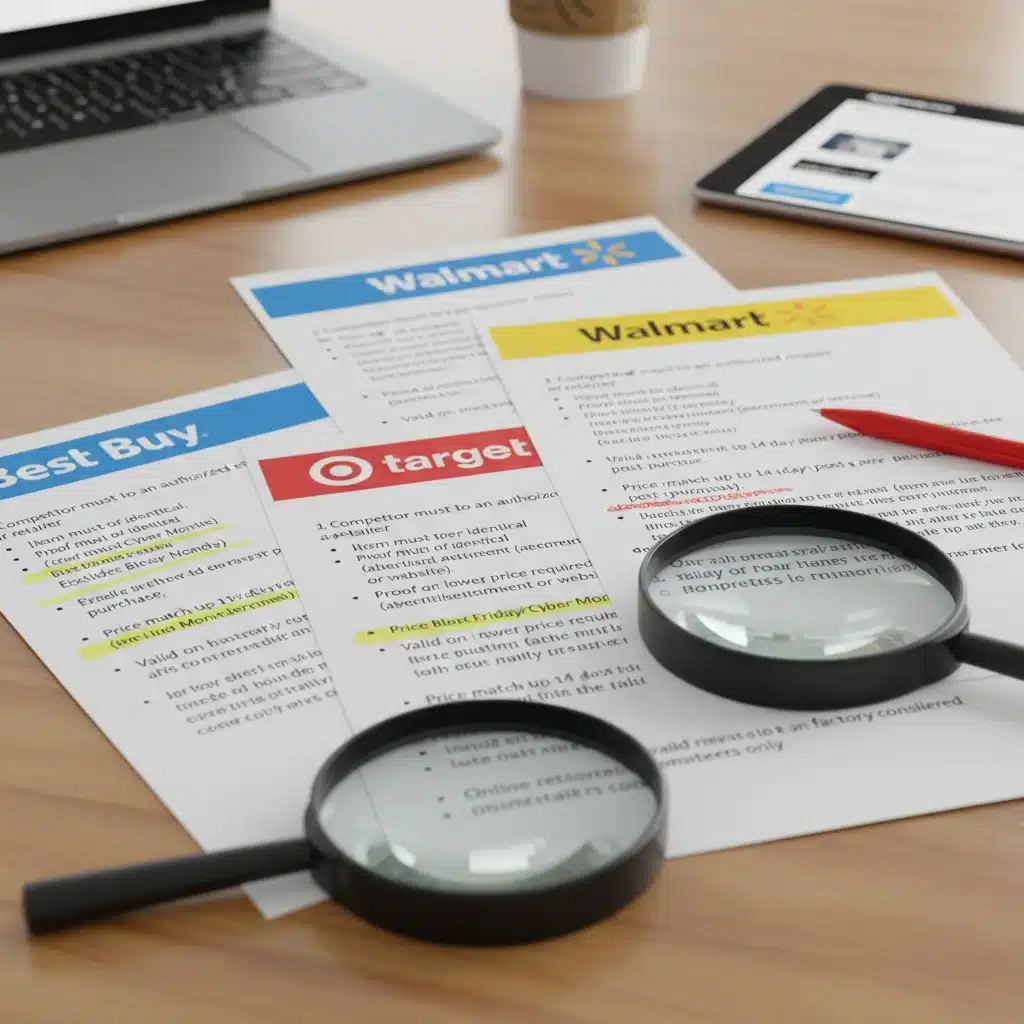
3. Prepare Your Evidence
Have your proof ready and easily accessible. For online prices, bookmark the page on your phone, take clear screenshots with the date/time visible, or even print out the page. For physical ads, bring the entire ad, not just a clipping.
Executing Your Price Match Strategy: In-Store and Online Tactics
With your preparation complete, it’s time to put your price match strategy into action. The approach will vary slightly depending on whether you’re in a physical store or shopping online.
In-Store Price Matching: The Human Element
This is where your interpersonal skills come into play. A friendly, confident, and polite demeanor can make all the difference.
- Locate the Item: Find the identical item in the target store.
- Approach Customer Service or a Sales Associate: It’s often best to go to the customer service desk first, as they are usually trained in price matching. If not, any sales associate can often help or direct you to someone who can.
- Present Your Case Clearly: "Hi, I’m interested in purchasing this [item name]. I noticed that [Competitor Name] has it for [lower price]. Your policy states you’ll match/beat competitor prices. Would it be possible to get the [lower price], or even better, the 10% beat that your policy sometimes offers?"
- Provide Evidence: Hand over your printed ad or show them the live webpage on your phone. Be patient while they verify.
- Be Polite and Persistent (If Necessary): If the first associate is unsure or says no, politely ask to speak with a manager. Frame it as, "I understand, but I was hoping a manager might be able to help me with this. I’m a loyal customer and would really appreciate it." Managers often have more discretion, especially when it comes to offering an additional percentage off.
- Highlight the ‘Beat’ Policy: If the retailer has a formal ‘10% beat’ policy (like Home Depot/Lowe’s often do), explicitly mention it. "I see on your website that you offer to beat competitor prices by 10%. Could you apply that to this purchase?"
- Don’t Be Afraid to Walk Away: If a retailer absolutely refuses or only offers a match when you know a beat is possible elsewhere, be prepared to politely thank them and take your business to the competitor that offers the better deal. Sometimes, the threat of losing a sale is enough to sway a manager.
Online Price Matching: Streamlined Savings
Online price matching is often more straightforward, but still requires attention to detail.
- Check the Retailer’s Online Policy: Many online retailers have a specific online price match form or a dedicated customer service chat for this purpose.
- Initiate a Chat or Call: Use the retailer’s online chat function or call their customer service line.
- Provide Links and Details: Be ready to provide direct links to the competitor’s product page showing the lower price. Explain that you’d like to invoke their price match strategy, ideally seeking a 10% beat if their policy allows.
- Document Everything: Keep screenshots of your chat conversations, reference numbers for phone calls, and the name of the representative you spoke with. This is crucial if there are any issues later.
- Post-Purchase Price Adjustments: Some online retailers offer price adjustments if an item you purchased drops in price within a certain window (e.g., 7-14 days). Keep an eye on prices after your purchase and request an adjustment if applicable.
Advanced Price Match Strategy: Beyond the Basics
Once you’ve mastered the fundamentals, you can explore more advanced tactics to maximize your savings.
Combining Price Matching with Coupons and Promotions
This is where the real magic happens. Some retailers allow you to combine a price match with other discounts, while others explicitly forbid it. Knowing which retailers permit this can significantly amplify your savings.
- Read the Fine Print: Always check the specific policy for combining discounts.
- Stacking Strategies: If a retailer allows it, you could price match an item to a competitor’s lower price, and then apply a store coupon (e.g., 20% off a single item, loyalty rewards, or a percentage off your total purchase). This is a powerful price match strategy that can lead to incredible deals.
- Credit Card Benefits: Some credit cards offer their own price protection benefits, which can act as a safety net if a retailer refuses to price match or beat. After your purchase, if the price drops, your credit card company might refund the difference.
Leveraging Loyalty Programs and Store Credit Cards
Being a loyal customer can give you an edge. Retailers are more likely to go the extra mile for customers who frequently shop with them or hold their store credit card. Mentioning your loyalty, or even subtly hinting at taking your business elsewhere, can sometimes sway a manager to approve a price beat, especially if their formal policy doesn’t explicitly state a 10% beat.
The Power of Polite Persistence
As mentioned, a ‘no’ from one associate isn’t always the final answer. Politely escalating to a manager can often yield different results. Managers have more authority and a vested interest in customer satisfaction and retaining sales. When speaking to a manager, reiterate your points clearly, show your evidence, and calmly explain why you believe you’re eligible for the price beat. Focus on the value of your business to them.
Common Pitfalls and How to Avoid Them
Even with the best price match strategy, there are common mistakes that can derail your efforts. Being aware of these can save you time and frustration.
- Incorrect Item Description: The most frequent issue is trying to match an item that isn’t truly identical. Double-check model numbers, UPCs, and specifications.
- Expired or Invalid Ads: Ensure your competitor’s ad or online price is current and valid.
- Unsupported Competitors: Trying to price match against a retailer not on the target store’s approved list.
- Lack of Evidence: Not having clear, verifiable proof of the lower price.
- Aggressive Behavior: Being rude or demanding will rarely get you the desired outcome. Politeness and respect go a long way.
- Assuming All Policies Are the Same: Each retailer has unique rules. Never assume one store’s policy applies to another.
- Overlooking Exclusions: Some items (e.g., clearance, refurbished, doorbusters) are often excluded from price matching.
Real-World Scenarios and Success Stories
Let’s illustrate how a well-executed price match strategy can lead to significant savings.
Scenario 1: The Home Improvement Project
You need a new power drill, priced at $199 at Lowe’s. You check Home Depot’s website and see the identical model for $180. Knowing Lowe’s often beats competitor prices by 10%, you approach the customer service desk at Lowe’s with your phone showing Home Depot’s live price. You politely state, "Hi, I’m looking to buy this drill, and I noticed Home Depot has it for $180. Your policy states you’ll beat competitor prices by 10%. Would I be able to get that discount?" The associate verifies the price. Instead of paying $199, you pay $162 ($180 – 10%). That’s a $37 saving on a single item!
Scenario 2: The Electronics Upgrade
You want a new smart TV from Best Buy, priced at $799. You find the same model at a reputable online electronics retailer for $750. You go to Best Buy, show the online price, and ask for a price match. While Best Buy’s formal policy might not include a 10% beat, you’re a My Best Buy member. You politely ask, "I’m a loyal My Best Buy member and was hoping to purchase this TV here. I found it for $750 at [Competitor Name]. Is there any way you could offer a bit more of a discount to secure my purchase today?" A manager, valuing your loyalty, might approve a small additional discount, pushing the price below $750, effectively a small ‘beat.’
These examples highlight the power of preparation, knowing the policies, and engaging respectfully with store staff. Your price match strategy should always be adaptable to the specific retailer and situation.
The Long-Term Benefits of a Savvy Price Match Strategy
Beyond immediate monetary savings, consistently employing a strong price match strategy offers several long-term advantages:
- Increased Savings Over Time: A few dollars saved on each purchase can add up to hundreds or even thousands annually, especially on big-ticket items.
- Empowered Shopping: You’ll feel more in control of your purchases, knowing you’re getting the best possible deal rather than simply accepting the first price you see.
- Better Value for Money: By ensuring you always pay the lowest possible price, you maximize the value of every dollar you spend.
- Reduced Impulse Buys: The need to research and compare prices can naturally lead to more thoughtful purchasing decisions, reducing impulse buys.
- Enhanced Financial Literacy: Engaging with price matching policies and negotiating strengthens your financial literacy and consumer awareness.
Conclusion: Make Every Purchase a Win with Your Price Match Strategy
Mastering the art of price matching, and specifically aiming for that desirable 10% beat, is a powerful skill that every consumer should cultivate. It’s not about being cheap; it’s about being smart, informed, and strategic. By understanding retailer motivations, meticulously preparing your evidence, knowing the specific policies, and engaging with store staff politely and confidently, you can consistently secure better deals than the average shopper.
Remember, your price match strategy is a dynamic tool. Retail policies evolve, and market conditions change. Stay informed, stay prepared, and don’t be afraid to ask for that extra discount. With the insights provided in this guide, you are now equipped to navigate the retail world with confidence, turning every potential purchase into an opportunity for significant savings. Go forth and conquer those prices – the 10% beat awaits!