2026 Social Security COLA: Projecting Financial Impact on US Retirees

The 2026 Social Security Cost-of-Living Adjustment: Projecting Its Financial Impact on US Retirees
For millions of American retirees, the annual Social Security Cost-of-Living Adjustment (COLA) is more than just a number; it’s a critical determinant of their financial well-being. As we look ahead, understanding the potential 2026 Social Security COLA becomes paramount for effective retirement planning. This adjustment, designed to help Social Security benefits keep pace with inflation, directly influences the purchasing power of seniors and other beneficiaries. While it’s still early to provide definitive figures, we can analyze the economic indicators and historical trends that typically shape the COLA to offer informed projections and discuss its potential financial impact on US retirees.
The Social Security Administration (SSA) announces the COLA each October, with the new rates taking effect in January of the following year. This means the 2026 Social Security COLA will be announced in October 2025, based on inflation data from the third quarter of 2025. However, by examining current economic conditions, inflation forecasts, and the methodology used to calculate the COLA, we can begin to form reasonable expectations.
Understanding the Social Security COLA Calculation
To accurately project the 2026 Social Security COLA, it’s essential to grasp how it’s calculated. The COLA is determined by comparing the average Consumer Price Index for Urban Wage Earners and Clerical Workers (CPI-W) in the third quarter (July, August, September) of the current year to the average CPI-W of the third quarter of the most recent year in which a COLA was payable. If there’s an increase, the percentage difference rounded to the nearest tenth of a percent becomes the COLA for the upcoming year.
This methodology means that the COLA is not a forward-looking estimate of future inflation but rather a backward-looking adjustment based on past inflationary pressures. Therefore, the economic environment leading up to and during the third quarter of 2025 will be the most crucial factor in determining the 2026 Social Security COLA.
Key Economic Indicators Influencing the 2026 Social Security COLA
Several economic indicators play a significant role in shaping the CPI-W and, consequently, the 2026 Social Security COLA:
- Inflation Rates: The most direct influence is, of course, inflation. Sustained increases in the cost of everyday goods and services, particularly in areas like food, energy, housing, and healthcare, will push the CPI-W higher. Economists closely monitor various inflation metrics, including the broader Consumer Price Index (CPI-U) and the Personal Consumption Expenditures (PCE) price index, to anticipate trends in CPI-W.
- Energy Prices: Fluctuations in global oil and gas prices have a substantial impact on the CPI-W, as energy costs affect transportation, utility bills, and the production costs of nearly all goods. A significant spike in energy prices during mid-2025 could lead to a higher 2026 Social Security COLA.
- Food Prices: Similar to energy, food prices are a significant component of household budgets and thus heavily weighted in the CPI-W. Supply chain disruptions, adverse weather events, and global commodity price shifts can all contribute to food inflation.
- Housing Costs: Rental costs and owners’ equivalent rent (OER) are substantial components of the CPI-W. Rising housing costs can exert upward pressure on the COLA.
- Wage Growth: While not a direct input to the COLA calculation, strong wage growth can contribute to overall demand-side inflation, which indirectly influences the CPI-W.
- Federal Reserve Policy: The Federal Reserve’s monetary policy, particularly interest rate decisions, aims to manage inflation. Aggressive rate hikes can cool down the economy and potentially dampen inflationary pressures, while rate cuts might stimulate demand and lead to higher inflation. The Fed’s actions throughout 2024 and 2025 will therefore be critical.
Initial Projections for the 2026 Social Security COLA
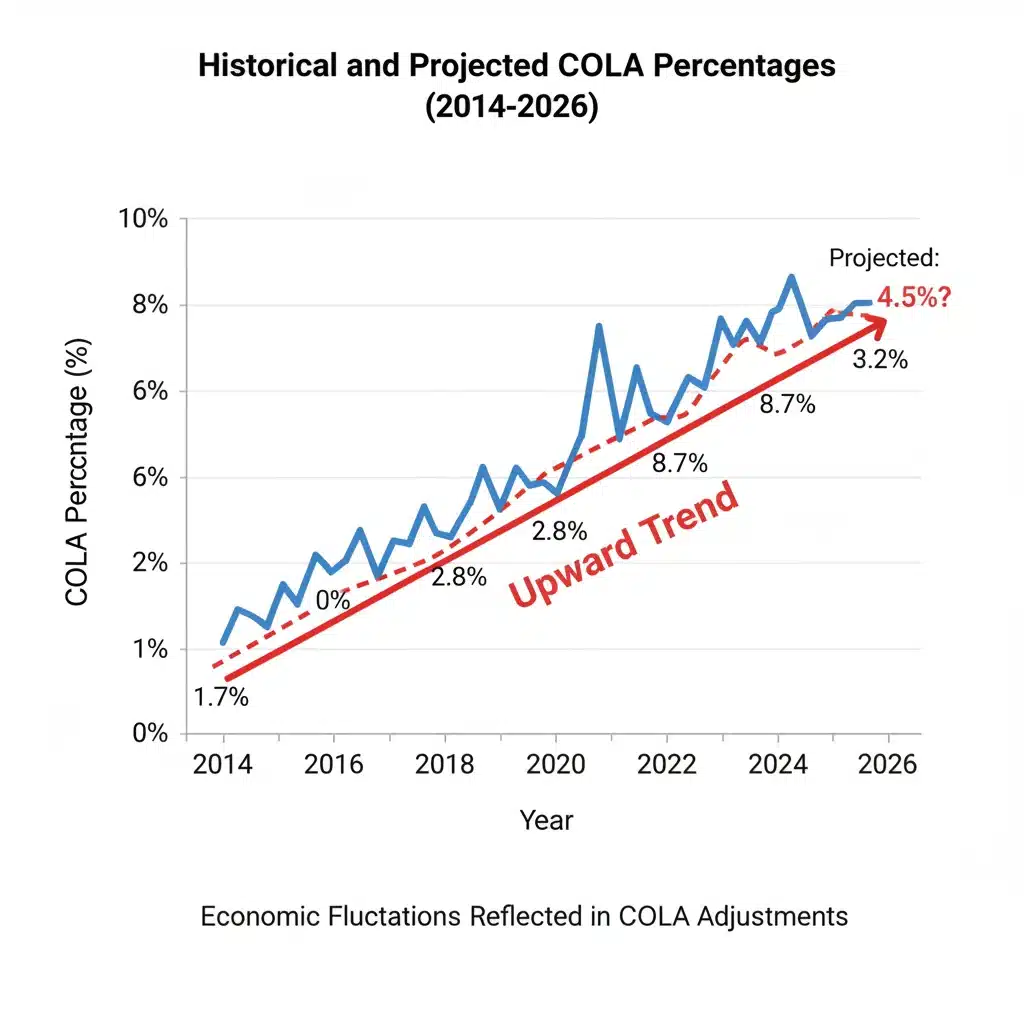
Given the forward-looking nature of this projection, any specific number for the 2026 Social Security COLA is purely speculative at this stage. However, based on current economic forecasts and historical patterns, we can establish a range of possibilities. Most economic projections for 2025 and 2026 anticipate a moderation of inflation compared to the elevated levels seen in 2021-2023. This suggests that the exceptionally high COLA increases of recent years (e.g., 5.9% for 2022, 8.7% for 2023) are unlikely to be repeated.
Analysts are generally forecasting inflation to trend closer to the Federal Reserve’s target of 2% in the medium term. If this holds true for the third quarter of 2025, the 2026 Social Security COLA could fall into a more modest range, perhaps between 2.0% and 3.5%. However, several factors could significantly alter this outlook:
- Geopolitical Events: Unforeseen global conflicts or trade disruptions can rapidly impact energy and food prices, leading to unexpected inflationary spikes.
- Supply Chain Resurgences: While supply chains have largely normalized, new disruptions (e.g., pandemics, natural disasters) could reintroduce inflationary pressures.
- Strong Economic Growth: A surprisingly robust economy in 2025 could lead to increased consumer demand and upward price pressure.
Conversely, a significant economic downturn or recession in 2025 could lead to lower inflation or even deflation, potentially resulting in a very low or even zero 2026 Social Security COLA. While a zero COLA is rare, it has occurred in the past during periods of economic contraction.
Financial Impact of the 2026 Social Security COLA on Retirees
The 2026 Social Security COLA will have a direct and tangible impact on the monthly benefits received by millions of US retirees. Even a seemingly small percentage increase can translate into significant additional income over the course of a year, helping to offset the rising cost of living.
Increased Purchasing Power (or Maintenance of It)
The primary goal of the COLA is to protect the purchasing power of Social Security beneficiaries. If the 2026 Social Security COLA keeps pace with the actual inflation experienced by seniors, it will allow them to maintain their standard of living without having to draw down their savings more rapidly. For retirees on fixed incomes, this adjustment is crucial for covering essential expenses like groceries, utilities, and healthcare.
Impact on Medicare Part B Premiums
One critical interaction to consider is the relationship between the COLA and Medicare Part B premiums. By law, if a beneficiary’s Social Security benefit increase is less than the increase in their Part B premium, the Part B premium increase cannot reduce their net Social Security benefit below the previous year’s level. This is known as the ‘hold harmless’ provision. However, this provision primarily applies to those who have their Part B premiums deducted directly from their Social Security checks.
If the 2026 Social Security COLA is modest, and Medicare Part B premiums see a substantial increase (which often happens due to rising healthcare costs), many retirees could find a significant portion, or even all, of their COLA absorbed by higher Medicare costs. This effectively diminishes the net benefit of the COLA.
Budgeting and Financial Planning Adjustments
Retirees and those nearing retirement should factor potential COLA adjustments into their long-term financial planning. While waiting for the official announcement, it’s prudent to plan for a conservative COLA. This approach helps ensure that budgets are realistic and that savings are sufficient to cover potential gaps if the COLA is lower than hoped or if inflation outpaces the adjustment.
For those still working and planning their retirement, understanding the COLA mechanism reinforces the importance of diverse income streams and robust savings. Relying solely on Social Security, even with annual COLA adjustments, may not be sufficient to cover all retirement expenses, especially if inflation remains elevated or if healthcare costs continue to climb rapidly.
Broader Economic Implications of the 2026 Social Security COLA
Beyond individual retirees, the 2026 Social Security COLA has broader economic implications, affecting government budgets and the overall economy.
Government Spending and the Social Security Trust Fund
A higher COLA means increased payouts from the Social Security Trust Fund. While the system is designed to handle these adjustments, sustained periods of high inflation and corresponding high COLAs can accelerate the depletion of the Trust Fund’s reserves. Policymakers closely watch these trends as they consider potential reforms to ensure the long-term solvency of Social Security.
Consumer Spending and Economic Growth
Social Security benefits represent a significant source of income for a large segment of the population. An increase in these benefits, driven by the 2026 Social Security COLA, can boost consumer spending, particularly among older Americans who tend to have a higher propensity to spend rather than save. This increased spending can provide a modest stimulus to the economy, supporting businesses and employment.
Conversely, a very low or zero COLA could lead to reduced consumer spending among retirees, potentially dampening economic activity.
Preparing for the 2026 Social Security COLA: Strategies for Retirees
While the exact figure for the 2026 Social Security COLA remains unknown, retirees and those approaching retirement can take several proactive steps to prepare for its impact and ensure their financial security.
Monitor Inflation Trends
Stay informed about inflation reports, particularly those related to the CPI-W. While you don’t need to become an economist, understanding the general direction of inflation can help you anticipate the likely range of the COLA. Pay attention to news regarding energy prices, food costs, and housing trends.
Review Your Budget Annually
Regardless of the COLA, an annual review of your household budget is crucial. Identify areas where expenses have increased and look for opportunities to cut costs. Understand how your major expenditures, particularly healthcare, are trending. This will help you assess whether the 2026 Social Security COLA will be sufficient to cover your rising costs.

Diversify Income Sources
Relying solely on Social Security for retirement income can be risky, especially if COLA adjustments are modest or if inflation outpaces them. Explore ways to diversify your income, such as:
- Savings and Investments: Maintain a well-diversified investment portfolio that can generate income or provide capital growth to supplement your Social Security benefits.
- Part-time Work: Even a few hours of part-time work can significantly boost your retirement income and provide a buffer against inflation.
- Annuities: Consider annuities that offer guaranteed income streams, providing an additional layer of financial security.
Optimize Healthcare Costs
Healthcare is a significant and often rising expense for retirees. Proactively managing healthcare costs can mitigate the impact of rising Medicare premiums. This might include:
- Reviewing Medicare Plans: Annually compare different Medicare Advantage and Medigap plans during open enrollment to ensure you have the most cost-effective coverage for your needs.
- Preventive Care: Staying healthy through preventive care can help avoid costly medical emergencies.
- Generic Prescriptions: Opt for generic medications whenever possible.
Consult a Financial Advisor
A qualified financial advisor can help you assess your overall financial situation, project your retirement income needs, and develop strategies to account for potential COLA adjustments and inflation. They can provide personalized advice on investment strategies, budgeting, and optimizing your Social Security benefits.
Looking Beyond 2026: Long-Term Outlook for COLA and Social Security
While our focus is on the 2026 Social Security COLA, it’s important to consider the longer-term outlook. The Social Security system faces demographic challenges, with a growing number of retirees relative to the working population. This puts pressure on the Trust Fund, and future legislative changes are possible.
Discussions about modifying the COLA calculation method occasionally arise. Some proposals suggest using the Consumer Price Index for the Elderly (CPI-E), which more accurately reflects the spending patterns of seniors (e.g., higher healthcare costs). If such a change were enacted, it could lead to different COLA outcomes in the future. However, for the 2026 Social Security COLA, the current CPI-W methodology is expected to remain in place.
Retirees should stay informed not only about the annual COLA announcements but also about broader discussions regarding Social Security reform. These discussions can influence the long-term sustainability and generosity of benefits.
Conclusion
The 2026 Social Security COLA is a critical piece of the financial puzzle for millions of US retirees. While specific projections are still months away, understanding the economic drivers behind the COLA and its calculation methodology allows for informed anticipation. Current trends suggest a more moderate COLA compared to the recent past, likely falling within the 2.0% to 3.5% range, assuming inflation continues its current trajectory of moderation.
However, geopolitical events, energy price shocks, or unexpected economic shifts could always alter this outlook. For retirees, the most effective strategy is proactive financial planning: diligently monitoring inflation, reviewing personal budgets, diversifying income sources, optimizing healthcare costs, and consulting with financial professionals. By taking these steps, retirees can better prepare for the 2026 Social Security COLA and navigate the evolving financial landscape of their retirement years, ensuring their hard-earned benefits continue to support a comfortable and secure lifestyle.