Peptides vs. Retinol: The Skincare Showdown for 2026
In the ever-evolving landscape of skincare, new ingredients emerge, promising revolutionary results, while established powerhouses continue to prove their worth. For years, one ingredient has dominated the anti-aging conversation: retinol. Its efficacy is undeniable, backed by decades of research and countless glowing testimonials. However, a new contender has been steadily gaining ground, captivating the attention of dermatologists, estheticians, and beauty enthusiasts alike: peptides. As we look towards 2026, the question isn’t just about what works, but what works best, what’s safest, and what truly aligns with the future of skin health. This comprehensive analysis delves deep into the ‘peptides vs retinol’ debate, comparing their mechanisms, benefits, side effects, and optimal integration into your skincare routine.
Understanding Retinol: The Gold Standard of Anti-Aging
Before we pit peptides against retinol, it’s crucial to understand why retinol has held its ‘gold standard’ title for so long. Retinol, a derivative of vitamin A, belongs to the retinoid family. When applied topically, it converts to retinoic acid in the skin. This retinoic acid then binds to specific receptors in skin cells, influencing gene expression and promoting a cascade of beneficial effects.
How Retinol Works Its Magic:
- Accelerated Cell Turnover: Retinol significantly speeds up the rate at which skin cells renew. This means old, dead skin cells are shed more quickly, revealing fresher, younger-looking skin underneath. This process helps to reduce the appearance of fine lines, wrinkles, and hyperpigmentation.
- Collagen Production Boost: One of retinol’s most celebrated benefits is its ability to stimulate collagen synthesis. Collagen, the most abundant protein in the skin, provides structural support and elasticity. As we age, collagen production naturally declines, leading to sagging and wrinkles. Retinol helps to counteract this decline, restoring firmness and plumpness to the skin.
- Improved Skin Texture and Tone: By promoting cell turnover and collagen production, retinol refines skin texture, making it smoother and more even. It also helps to reduce pore size and can be effective in treating acne by preventing clogged pores.
- Antioxidant Properties: While not its primary function, retinol also possesses antioxidant properties, helping to neutralize free radicals that contribute to premature aging.
The Downsides of Retinol:
Despite its impressive benefits, retinol isn’t without its challenges. Its potent nature can often lead to a ‘retinization period,’ characterized by:
- Irritation: Redness, dryness, flaking, and sensitivity are common, especially when first introducing retinol to a routine.
- Photosensitivity: Retinol can make the skin more susceptible to sun damage, necessitating diligent sunscreen use.
- Not for Everyone: Pregnant or breastfeeding individuals are advised to avoid retinoids. Those with extremely sensitive skin or certain skin conditions might find retinol too harsh.
- Gradual Introduction: To minimize side effects, retinol usually requires a slow, gradual introduction, starting with lower concentrations and infrequent use.
Introducing Peptides: The Future of Skincare Communication
Now, let’s turn our attention to peptides, the rising stars in the skincare galaxy. Peptides are short chains of amino acids, which are the building blocks of proteins. In the context of skincare, these tiny messengers play a crucial role in cellular communication, signaling the skin to perform various functions, such as producing more collagen, repairing damage, or reducing inflammation.
The Diverse World of Peptides and Their Functions:
There isn’t just one type of peptide; rather, there are numerous categories, each with unique functions. This diversity is a key reason why peptides are becoming increasingly sophisticated and targeted in their applications.
- Signal Peptides: These peptides signal the skin to produce more collagen and elastin, similar to retinol but often with less irritation. Examples include palmitoyl pentapeptide-4 (Matrixyl) and palmitoyl tripeptide-1. They are crucial in the ‘peptides vs retinol’ discussion for their anti-aging potential.
- Carrier Peptides: These peptides help deliver trace elements, like copper and manganese, to the skin, which are essential for wound healing and enzymatic processes. Copper peptides, for instance, are known for their regenerative and anti-inflammatory properties.
- Enzyme Inhibitor Peptides: These peptides work by inhibiting enzymes that break down collagen and elastin, thereby preserving the skin’s structural integrity. An example is rice protein, which can inhibit matrix metalloproteinases (MMPs).
- Neurotransmitter Peptides: Often referred to as ‘botox-like’ peptides, these work by temporarily inhibiting muscle contractions, leading to a reduction in the appearance of expression lines. Acetyl hexapeptide-8 (Argireline) is a well-known example.
- Antimicrobial Peptides: Some peptides possess natural antimicrobial properties, helping to protect the skin from harmful bacteria and supporting a healthy skin microbiome.

Why Peptides Are Gaining Traction:
- Gentle Yet Effective: One of the biggest advantages of peptides is their generally non-irritating nature. They work with the skin’s natural processes, making them suitable for almost all skin types, including sensitive skin. This is a significant differentiator in the ‘peptides vs retinol’ debate.
- Targeted Action: Different peptides can be formulated to address specific concerns, offering a more tailored approach to skincare.
- Synergistic Benefits: Peptides often work synergistically with other active ingredients, enhancing overall product efficacy without causing adverse reactions.
- Support Skin Barrier Function: Many peptides contribute to strengthening the skin’s natural barrier, improving its resilience against environmental aggressors and reducing moisture loss.
Peptides vs Retinol: A Head-to-Head Comparison
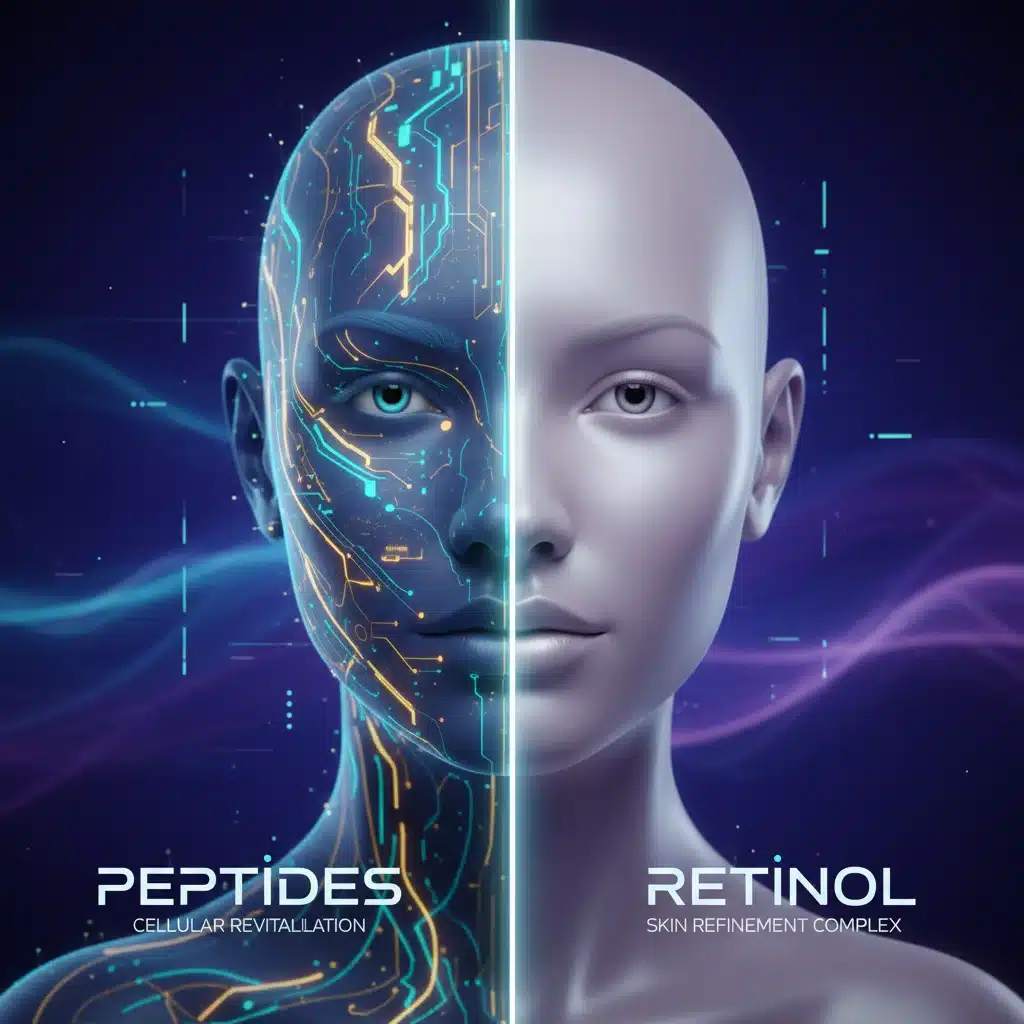
Now that we’ve explored each ingredient individually, let’s directly compare peptides vs retinol to understand their unique strengths and weaknesses.
Efficacy in Anti-Aging:
- Retinol: Proven to significantly reduce fine lines, wrinkles, and hyperpigmentation by accelerating cell turnover and boosting collagen. Its effects are often more dramatic and visible in a shorter timeframe, especially for established signs of aging.
- Peptides: Highly effective in stimulating collagen and elastin production, improving skin firmness, and reducing the appearance of wrinkles. While their results might be more gradual than retinol’s, they offer a sustained improvement in skin health and structure. Neurotransmitter peptides can also offer immediate, albeit temporary, smoothing effects on expression lines.
Side Effects and Tolerance:
- Retinol: Associated with potential irritation, dryness, flaking, and photosensitivity, especially during the initial retinization period. Requires careful introduction and consistent sunscreen use.
- Peptides: Generally very well tolerated with minimal to no side effects. Suitable for sensitive skin and can be used daily without significant concerns about irritation or sun sensitivity. This makes the ‘peptides vs retinol’ choice clearer for some individuals.
Mechanism of Action:
- Retinol: Works by converting to retinoic acid, which directly interacts with skin cell receptors, altering gene expression to promote cell renewal and collagen synthesis.
- Peptides: Act as messengers, signaling the skin to perform various functions, such as producing more collagen, repairing damage, or relaxing muscles. They work with the skin’s natural communication systems.
Versatility and Application:
- Retinol: Best used at night due to photosensitivity. Available in various concentrations, requiring careful selection based on skin tolerance.
- Peptides: Can be used both morning and night. Highly versatile and can be incorporated into serums, moisturizers, and eye creams. Their gentle nature allows for layering with other actives.
Can Peptides and Retinol Be Used Together?
This is a common and crucial question in the ‘peptides vs retinol’ discussion. The good news is, yes, they can! In fact, when used correctly, peptides and retinol can complement each other beautifully, offering enhanced anti-aging benefits. Retinol works to overhaul the skin, while peptides provide targeted support and communication. Peptides can also help to mitigate some of the potential irritation associated with retinol, making the retinization process smoother.
Strategies for Combining Peptides and Retinol:
- Alternate Days: Use retinol on one night and a peptide serum on the alternate night. This allows your skin to adapt to each ingredient individually.
- Separate Application Times: Use peptides in your morning routine and retinol in your evening routine. This ensures each ingredient has its dedicated time to work without potential interaction conflicts.
- Layering (with caution): If your skin is well-acclimated to retinol, you can layer a peptide serum after your retinol product. Ensure the retinol has fully absorbed before applying the peptide product. Opt for hydrating or barrier-supporting peptides when layering with retinol.
- Choose Formulations Wisely: Some advanced skincare products are now formulating peptides and retinoids together in a single product, often using encapsulated retinol or gentle retinoid derivatives to minimize irritation.
The Future of Skincare in 2026: A Synergistic Approach
As we look forward to 2026, the ‘peptides vs retinol’ debate isn’t about one ingredient completely replacing the other. Instead, the trend is moving towards a more sophisticated, synergistic approach. Skincare is becoming increasingly personalized skincare, with formulations designed to address individual concerns and tolerances. Peptides are not necessarily the ‘new retinol’ in the sense of a direct replacement, but rather a powerful complementary ingredient that broadens the scope of effective anti-aging solutions.

Emerging Trends and Innovations:
- Bio-Identical Peptides: Expect to see more peptides designed to precisely mimic the skin’s natural signaling molecules, leading to even more targeted and efficient results.
- Encapsulated Retinoids: Advances in delivery systems are making retinoids more stable and less irritating, allowing for their inclusion in a wider range of products and making them more accessible to sensitive skin types.
- Peptide-Retinoid Hybrids: Formulations that cleverly combine specific peptides with gentler forms of retinoids to maximize benefits while minimizing adverse reactions will become more prevalent.
- Focus on Skin Barrier Health: Both peptides and advanced retinol formulations will increasingly emphasize supporting and repairing the skin barrier, recognizing its crucial role in overall skin health and resilience.
Who Should Choose Peptides?
- Individuals with sensitive skin who find retinol too irritating.
- Those who are pregnant or breastfeeding.
- Anyone looking for a gentle, preventative anti-aging solution.
- People seeking to target specific concerns like expression lines (neurotransmitter peptides) or wound healing (copper peptides).
- Those who want to strengthen their skin barrier and improve overall skin resilience.
Who Should Choose Retinol?
- Individuals with more pronounced signs of aging, such as deep wrinkles, significant hyperpigmentation, and loss of firmness.
- Those dealing with acne and clogged pores.
- Individuals who have successfully acclimated their skin to potent actives and seek transformative results.
- Anyone looking for a scientifically proven ingredient with decades of research backing its efficacy.
Making the Right Choice for Your Skin in 2026
Ultimately, the choice between peptides vs retinol, or indeed the decision to use both, depends on your individual skin concerns, skin type, tolerance, and overall skincare goals. There is no one-size-fits-all answer, and what works wonders for one person might not be ideal for another. The best approach is always to:
- Understand Your Skin: Pay attention to how your skin reacts to different ingredients.
- Research Ingredients: Educate yourself on the science behind each active.
- Start Slowly: Introduce new actives one at a time and observe your skin’s response.
- Consult a Professional: A dermatologist or qualified skincare professional can provide personalized recommendations and guidance, especially if you have specific skin conditions or concerns.
Conclusion: A Future of Enhanced Skincare Synergy
In conclusion, while retinol remains a formidable force in anti-aging skincare, peptides have firmly established their place as indispensable allies. The ‘peptides vs retinol’ narrative is evolving from a rivalry to a partnership. As we step into 2026, the most effective skincare routines will likely leverage the unique strengths of both, creating a synergistic approach that addresses a wider range of concerns with greater precision and less irritation. Peptides aren’t simply the ‘new retinol’; they represent a sophisticated evolution in how we communicate with our skin, offering a gentle yet powerful pathway to healthier, more resilient, and youthful-looking skin. Embrace the future of skincare by understanding these two titans and how they can work together to unlock your skin’s full potential.