Exfoliation Techniques 2026: Chemical vs. Physical for Your Skin Type
In the ever-evolving landscape of skincare, staying ahead of the curve is crucial for achieving and maintaining a healthy, radiant complexion. As we look towards 2026, exfoliation remains a cornerstone of any effective skincare regimen. However, with an abundance of products and methods available, understanding the nuances of various exfoliation techniques 2026 is more important than ever. This comprehensive guide will delve deep into the world of exfoliation, comparing chemical and physical methods, and helping you determine the best approach for your specific skin type.
The Importance of Exfoliation in Your 2026 Skincare Routine
Exfoliation is the process of removing dead skin cells from the surface of your skin. This natural process slows down as we age, leading to a dull complexion, clogged pores, and uneven skin texture. Regular exfoliation can dramatically improve your skin’s appearance and health by:
- Promoting Cell Turnover: It encourages the production of new, healthy skin cells, leading to a brighter and more youthful appearance.
- Unclogging Pores: By removing dead skin and debris, exfoliation helps prevent blackheads, whiteheads, and acne breakouts.
- Improving Product Absorption: With fewer dead skin cells acting as a barrier, your serums, moisturizers, and treatments can penetrate more effectively, maximizing their benefits.
- Evening Skin Tone and Texture: Exfoliation can diminish the appearance of dark spots, hyperpigmentation, and rough patches, resulting in a smoother, more uniform complexion.
- Boosting Radiance: It reveals the fresh, glowing skin underneath, giving you a healthy and vibrant look.
As we enter 2026, the emphasis is increasingly on smart, personalized skincare. Gone are the days of one-size-fits-all solutions. Understanding your skin’s unique needs and choosing the right exfoliation techniques 2026 is paramount to achieving optimal results without causing irritation or damage.
Chemical Exfoliation: The Science Behind Radiant Skin in 2026
Chemical exfoliation utilizes acids to dissolve the bonds between dead skin cells, allowing them to slough off easily. Far from being harsh or abrasive, modern chemical exfoliants are formulated to be gentle yet effective, making them a popular choice among skincare enthusiasts and dermatologists alike. The key lies in selecting the right type and concentration for your skin.
Alpha Hydroxy Acids (AHAs)
AHAs are water-soluble acids derived from fruits, milk, or sugar cane. They work primarily on the surface of the skin, making them excellent for addressing concerns like:
- Fine Lines and Wrinkles: AHAs stimulate collagen production, which can reduce the appearance of aging.
- Uneven Skin Tone: They help to fade dark spots, sun damage, and hyperpigmentation.
- Dullness: By removing dead skin cells, AHAs reveal brighter, more luminous skin.
- Dry Skin: Some AHAs, like lactic acid, have humectant properties, meaning they can attract and retain moisture in the skin.
Common AHAs include:
- Glycolic Acid: Derived from sugar cane, it has the smallest molecular size, allowing it to penetrate deeply. Ideal for normal to oily skin types seeking significant anti-aging benefits.
- Lactic Acid: Derived from milk, it’s gentler than glycolic acid and offers hydrating properties. Excellent for dry or sensitive skin.
- Mandelic Acid: Derived from bitter almonds, it has a larger molecular size, meaning it penetrates slower and is less irritating. Perfect for sensitive skin, rosacea, and acne-prone skin.
- Citric Acid: Found in citrus fruits, it’s often used in lower concentrations for brightening effects.
Beta Hydroxy Acids (BHAs)
BHAs are oil-soluble acids, meaning they can penetrate through oil and into the pores. This unique property makes them incredibly effective for:
- Acne and Breakouts: BHAs can dissolve sebum and dead skin cells within the pore, preventing and treating acne.
- Oily Skin: They help to regulate oil production and reduce shine.
- Blackheads and Whiteheads: By clearing out clogged pores, BHAs significantly reduce these common concerns.
- Inflammation: Salicylic acid, the most common BHA, has anti-inflammatory properties, making it beneficial for inflamed acne and redness.
The primary BHA is Salicylic Acid, derived from willow bark. It’s a go-to ingredient for anyone struggling with oily, acne-prone, or congested skin.
Poly Hydroxy Acids (PHAs)
PHAs are the gentlest of the chemical exfoliants, making them ideal for even the most sensitive skin types, including those with eczema or rosacea. They have a larger molecular structure than AHAs, meaning they penetrate the skin more slowly and superficially, minimizing irritation. PHAs also offer antioxidant benefits and can help strengthen the skin’s barrier function.
- Gluconolactone: A popular PHA known for its hydrating and antioxidant properties.
- Lactobionic Acid: Another gentle PHA that provides excellent moisturizing benefits.
Physical Exfoliation: The Art of Manual Renewal in 2026
Physical exfoliation, also known as manual exfoliation, involves using a tool or product with a gritty texture to physically remove dead skin cells from the skin’s surface. While often perceived as more aggressive, modern physical exfoliation techniques 2026 have evolved to be much gentler and more refined, offering a quick and satisfying way to achieve smoother skin.
Types of Physical Exfoliants
- Scrubs: These contain small particles (e.g., jojoba beads, finely ground seeds, or sugar) that buff away dead skin. The key is to choose scrubs with uniformly spherical particles to avoid micro-tears. Avoid harsh scrubs with irregular, sharp particles like crushed nut shells.
- Cleansing Brushes: Devices like sonic cleansing brushes use oscillating or vibrating bristles to gently dislodge dead skin cells and impurities. They can be very effective when used correctly and not over-used.
- Exfoliating Mitts or Cloths: Washcloths, konjac sponges, or specialized exfoliating mitts can provide a gentle manual exfoliation, especially for sensitive skin types.
- Dermaplaning: A professional treatment (or at-home tool) that uses a sterile surgical scalpel to gently scrape off dead skin cells and vellus hair (peach fuzz) from the face. This should only be done by trained professionals or with extreme caution at home using specific tools.
- Microdermabrasion: A professional treatment that uses a specialized applicator to spray fine crystals or a diamond tip to abrade the outer layer of skin, then vacuums away the dead skin cells.
Tips for Safe Physical Exfoliation
- Be Gentle: Never scrub aggressively. Let the product or tool do the work.
- Use Warm Water: This helps to soften the skin and open pores, making exfoliation more effective.
- Frequency Matters: Depending on your skin type, physical exfoliation may be suitable once or twice a week, but never daily.
- Moisturize Afterward: Always follow with a hydrating moisturizer to replenish the skin’s barrier.
Choosing the Right Exfoliation Technique for Your Skin Type in 2026
The most crucial step in effective exfoliation is understanding your skin type and its specific needs. Using the wrong exfoliation techniques 2026 can lead to irritation, redness, and even damage to your skin barrier.
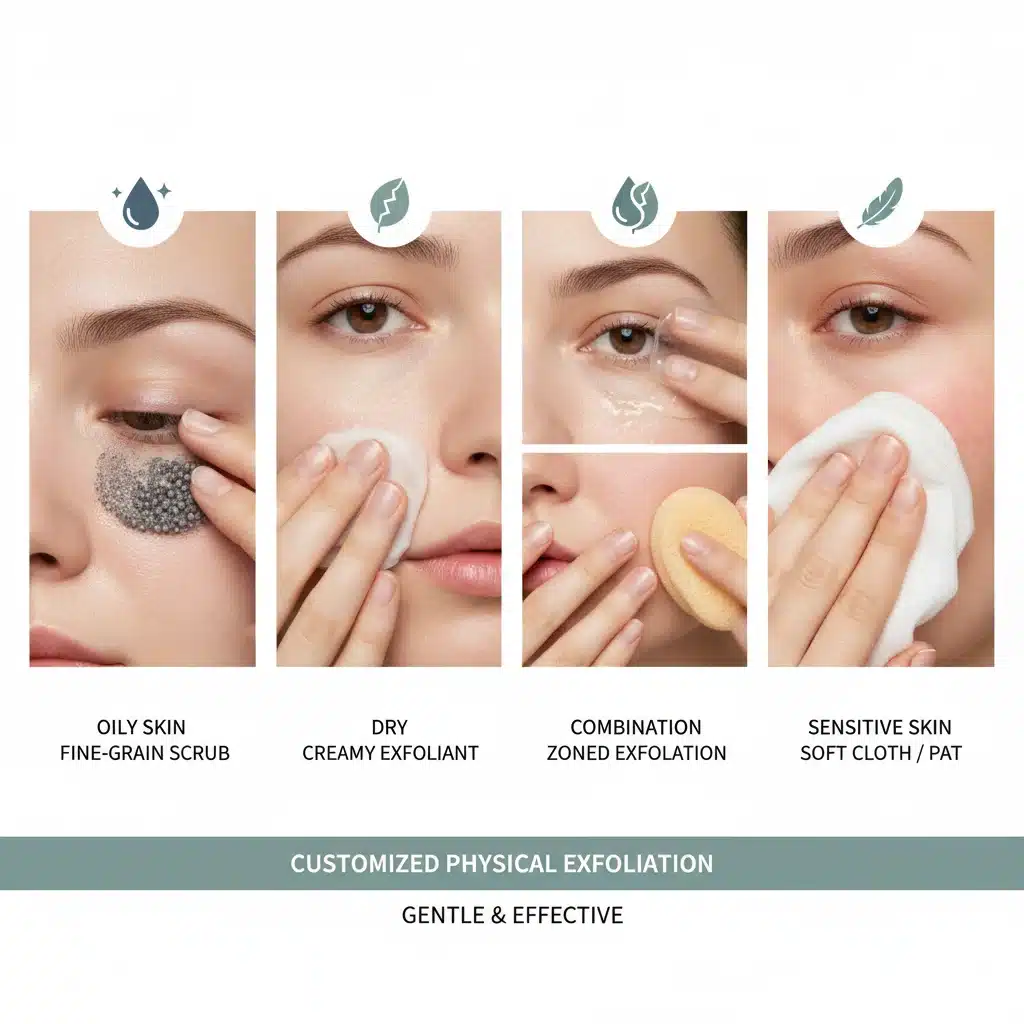
Oily and Acne-Prone Skin
- Best Chemical Exfoliants: BHAs (Salicylic Acid) are your best friend. Their oil-soluble nature allows them to penetrate pores, dissolving sebum and preventing breakouts. Glycolic acid can also be beneficial for overall skin renewal and texture.
- Best Physical Exfoliants: Gentle scrubs with spherical beads or a sonic cleansing brush can be used 1-2 times a week to remove surface oil and dead skin. Avoid harsh scrubbing, which can stimulate more oil production.
- Frequency: Chemical exfoliants can often be used several times a week, depending on concentration and skin tolerance. Physical exfoliation 1-2 times a week.
Dry Skin
- Best Chemical Exfoliants: AHAs like Lactic Acid are excellent as they offer both exfoliation and hydration. PHAs are also a fantastic gentle option.
- Best Physical Exfoliants: Opt for very mild physical exfoliation, such as a soft washcloth or a gentle konjac sponge. Avoid abrasive scrubs entirely.
- Frequency: 1-2 times a week for chemical exfoliation. Physical exfoliation once a week or less.
Combination Skin
- Best Chemical Exfoliants: A combination approach can work. You might use a BHA in oilier T-zone areas and a gentler AHA or PHA on drier areas. Alternatively, a product containing a blend of AHAs and BHAs in balanced concentrations can be effective.
- Best Physical Exfoliants: Focus gentle physical exfoliation on oilier zones if needed, 1-2 times a week.
- Frequency: Adjust based on your skin’s response, typically 2-3 times a week for chemical, 1 time a week for physical.
Sensitive Skin
- Best Chemical Exfoliants: PHAs are the safest and most recommended option due to their gentle nature and barrier-strengthening properties. Lactic acid is also a good choice for a milder AHA.
- Best Physical Exfoliants: Avoid harsh scrubs completely. A very soft washcloth or konjac sponge with light pressure is the only physical exfoliation recommended. Dermaplaning should be approached with extreme caution, and only by a professional.
- Frequency: Start with once a week for chemical exfoliants and increase slowly if tolerated. Physical exfoliation should be very infrequent, if at all.
Normal Skin
- Best Chemical Exfoliants: You have the most flexibility! Glycolic acid for anti-aging, lactic acid for hydration, or a BHA for occasional breakouts. You can experiment to see what your skin responds to best.
- Best Physical Exfoliants: Gentle scrubs or a cleansing brush 1-2 times a week.
- Frequency: 2-3 times a week for chemical, 1-2 times a week for physical.
Advanced Exfoliation Trends and Innovations for 2026
As we move further into 2026, the world of exfoliation continues to innovate, offering even more sophisticated and personalized options:
- Enzyme Exfoliants: Derived from fruits like papaya and pineapple, these are gentle alternatives to chemical acids. Enzymes break down the protein bonds that hold dead skin cells together, offering a very mild exfoliation. They are excellent for sensitive skin types or as a ‘maintenance’ exfoliant.
- Microbiome-Friendly Exfoliation: A growing trend focuses on maintaining the skin’s healthy microbiome. Products are being developed that exfoliate without stripping beneficial bacteria, often incorporating prebiotics and probiotics.
- Smart Devices with Personalized Recommendations: Expect to see more at-home devices that analyze your skin’s condition and recommend specific exfoliation protocols or product pairings.
- Customizable Formulations: The rise of bespoke skincare means you can increasingly find exfoliants tailored precisely to your skin’s evolving needs, with specific concentrations and ingredient blends.
- Sustainable and Ethical Sourcing: The demand for eco-friendly and ethically sourced ingredients will continue to shape the exfoliation market, with a focus on natural, biodegradable physical exfoliants and sustainably produced chemical acids.
These emerging exfoliation techniques 2026 highlight a shift towards more holistic and science-backed approaches, ensuring that skincare is not just about immediate results but also long-term skin health.
Common Mistakes to Avoid When Exfoliating
Even with the best intentions, it’s easy to make mistakes that can hinder your exfoliation efforts or even damage your skin. Be mindful of these common pitfalls:
- Over-Exfoliation: This is perhaps the most common mistake. Exfoliating too frequently or using too many active ingredients can strip your skin’s natural oils, compromise its barrier function, and lead to redness, irritation, sensitivity, and even breakouts. Signs of over-exfoliation include extreme dryness, flakiness, tightness, redness, and increased sensitivity to other products.
- Using Harsh Physical Scrubs: Avoid scrubs with large, irregularly shaped particles like crushed nuts or fruit pits. These can create micro-tears in the skin, leading to inflammation and potential infection. Always opt for fine, spherical particles if choosing a physical scrub.
- Mixing Too Many Actives: Be cautious when combining different chemical exfoliants (e.g., glycolic acid with salicylic acid) or using them alongside other potent actives like retinoids or Vitamin C. This can be too much for your skin and lead to irritation. Introduce new products gradually and observe your skin’s reaction.
- Not Using Sunscreen: Exfoliation, especially chemical exfoliation, makes your skin more susceptible to sun damage. Always apply a broad-spectrum sunscreen with an SPF of 30 or higher daily, even on cloudy days, to protect your newly revealed skin cells.
- Ignoring Your Skin’s Signals: Your skin is constantly communicating with you. If you experience burning, stinging, excessive redness, or discomfort after exfoliating, it’s a sign to reduce frequency, switch to a gentler product, or consult a dermatologist.
- Exfoliating Irritated or Compromised Skin: Never exfoliate skin that is already irritated, sunburnt, broken, or suffering from active conditions like severe eczema or rosacea flares. Allow your skin to heal first.
- Not Moisturizing Post-Exfoliation: Exfoliation can temporarily dehydrate the skin. Always follow up with a nourishing moisturizer to replenish hydration and support the skin barrier.
Integrating Exfoliation into Your 2026 Skincare Routine: A Step-by-Step Guide
To maximize the benefits of your chosen exfoliation techniques 2026, it’s essential to integrate them thoughtfully into your overall skincare regimen.
Morning Routine (Non-Exfoliation Days):
- Cleanse: Use a gentle, hydrating cleanser.
- Tone (Optional): A hydrating or balancing toner.
- Serums: Apply your antioxidant serum (e.g., Vitamin C).
- Moisturize: A lightweight moisturizer.
- Sunscreen: Non-negotiable! SPF 30+ broad-spectrum.
Evening Routine (Exfoliation Days):
- Double Cleanse: Start with an oil-based cleanser to remove makeup and sunscreen, followed by a water-based cleanser.
- Exfoliate: Apply your chosen chemical exfoliant (e.g., AHA/BHA toner, serum) or perform your physical exfoliation. If using a leave-on chemical exfoliant, apply it to clean, dry skin and wait a few minutes for it to absorb.
- Targeted Treatments (Optional): If using other actives like retinoids, apply them on non-exfoliation nights or alternate carefully. Consult a dermatologist for guidance on combining potent ingredients.
- Hydrating Serum: A hyaluronic acid serum can help replenish moisture.
- Moisturize: A richer night cream to support skin barrier repair overnight.
Evening Routine (Non-Exfoliation Days):
- Double Cleanse: As above.
- Tone (Optional): Hydrating toner.
- Targeted Treatments: Apply retinoids, peptides, or other active serums.
- Hydrating Serum: If needed.
- Moisturize: Night cream.
Pro Tip for 2026: Skin Cycling
A popular and highly effective approach, especially for sensitive or reactive skin, is ‘skin cycling.’ This involves rotating your active skincare ingredients over several nights. A typical cycle might look like:
- Night 1: Exfoliation Night (Use a chemical exfoliant)
- Night 2: Retinoid Night (Apply your retinoid product)
- Night 3 & 4: Recovery Nights (Focus on hydration and barrier repair with gentle cleansers, hydrating serums, and rich moisturizers, no actives).
This cycle repeats, allowing your skin to reap the benefits of actives while also getting crucial recovery time, preventing over-exfoliation and irritation. This structured approach is gaining significant traction and is one of the top exfoliation techniques 2026 for balanced skin health.
The Future of Exfoliation: What to Expect Beyond 2026
Looking beyond 2026, the trend towards hyper-personalization, sustainability, and integration with overall wellness will only intensify. We can anticipate:
- AI-Powered Skin Diagnostics: More sophisticated at-home devices and apps that use AI to analyze skin at a deeper level, providing real-time exfoliation recommendations based on environmental factors, lifestyle, and even genetic predispositions.
- Bio-Engineered Exfoliants: Development of novel exfoliating ingredients that are even more targeted, biocompatible, and sustainable, potentially leveraging advanced biotechnology.
- Integrated Skincare-Wellness Approaches: Exfoliation will be seen as part of a broader wellness strategy, considering diet, stress levels, and sleep patterns as interconnected factors influencing skin health and the effectiveness of skincare routines.
- Closed-Loop Systems: Skincare brands will move towards fully circular production models, from ingredient sourcing to packaging, minimizing environmental impact.
The journey to radiant skin is continuous, and staying informed about the latest exfoliation techniques 2026 and beyond will empower you to make the best choices for your complexion.
Common Mistakes to Avoid When Exfoliating
Even with the best intentions, it’s easy to make mistakes that can hinder your exfoliation efforts or even damage your skin. Be mindful of these common pitfalls:
- Over-Exfoliation: This is perhaps the most common mistake. Exfoliating too frequently or using too many active ingredients can strip your skin’s natural oils, compromise its barrier function, and lead to redness, irritation, sensitivity, and even breakouts. Signs of over-exfoliation include extreme dryness, flakiness, tightness, redness, and increased sensitivity to other products.
- Using Harsh Physical Scrubs: Avoid scrubs with large, irregularly shaped particles like crushed nuts or fruit pits. These can create micro-tears in the skin, leading to inflammation and potential infection. Always opt for fine, spherical particles if choosing a physical scrub.
- Mixing Too Many Actives: Be cautious when combining different chemical exfoliants (e.g., glycolic acid with salicylic acid) or using them alongside other potent actives like retinoids or Vitamin C. This can be too much for your skin and lead to irritation. Introduce new products gradually and observe your skin’s reaction.
- Not Using Sunscreen: Exfoliation, especially chemical exfoliation, makes your skin more susceptible to sun damage. Always apply a broad-spectrum sunscreen with an SPF of 30 or higher daily, even on cloudy days, to protect your newly revealed skin cells.
- Ignoring Your Skin’s Signals: Your skin is constantly communicating with you. If you experience burning, stinging, excessive redness, or discomfort after exfoliating, it’s a sign to reduce frequency, switch to a gentler product, or consult a dermatologist.
- Exfoliating Irritated or Compromised Skin: Never exfoliate skin that is already irritated, sunburnt, broken, or suffering from active conditions like severe eczema or rosacea flares. Allow your skin to heal first.
- Not Moisturizing Post-Exfoliation: Exfoliation can temporarily dehydrate the skin. Always follow up with a nourishing moisturizer to replenish hydration and support the skin barrier.
Integrating Exfoliation into Your 2026 Skincare Routine: A Step-by-Step Guide
To maximize the benefits of your chosen exfoliation techniques 2026, it’s essential to integrate them thoughtfully into your overall skincare regimen.
Morning Routine (Non-Exfoliation Days):
- Cleanse: Use a gentle, hydrating cleanser.
- Tone (Optional): A hydrating or balancing toner.
- Serums: Apply your antioxidant serum (e.g., Vitamin C).
- Moisturize: A lightweight moisturizer.
- Sunscreen: Non-negotiable! SPF 30+ broad-spectrum.
Evening Routine (Exfoliation Days):
- Double Cleanse: Start with an oil-based cleanser to remove makeup and sunscreen, followed by a water-based cleanser.
- Exfoliate: Apply your chosen chemical exfoliant (e.g., AHA/BHA toner, serum) or perform your physical exfoliation. If using a leave-on chemical exfoliant, apply it to clean, dry skin and wait a few minutes for it to absorb.
- Targeted Treatments (Optional): If using other actives like retinoids, apply them on non-exfoliation nights or alternate carefully. Consult a dermatologist for guidance on combining potent ingredients.
- Hydrating Serum: A hyaluronic acid serum can help replenish moisture.
- Moisturize: A richer night cream to support skin barrier repair overnight.
Evening Routine (Non-Exfoliation Days):
- Double Cleanse: As above.
- Tone (Optional): Hydrating toner.
- Targeted Treatments: Apply retinoids, peptides, or other active serums.
- Hydrating Serum: If needed.
- Moisturize: Night cream.
Pro Tip for 2026: Skin Cycling
A popular and highly effective approach, especially for sensitive or reactive skin, is ‘skin cycling.’ This involves rotating your active skincare ingredients over several nights. A typical cycle might look like:
- Night 1: Exfoliation Night (Use a chemical exfoliant)
- Night 2: Retinoid Night (Apply your retinoid product)
- Night 3 & 4: Recovery Nights (Focus on hydration and barrier repair with gentle cleansers, hydrating serums, and rich moisturizers, no actives).
This cycle repeats, allowing your skin to reap the benefits of actives while also getting crucial recovery time, preventing over-exfoliation and irritation. This structured approach is gaining significant traction and is one of the top exfoliation techniques 2026 for balanced skin health.
The Future of Exfoliation: What to Expect Beyond 2026
Looking beyond 2026, the trend towards hyper-personalization, sustainability, and integration with overall wellness will only intensify. We can anticipate:
- AI-Powered Skin Diagnostics: More sophisticated at-home devices and apps that use AI to analyze skin at a deeper level, providing real-time exfoliation recommendations based on environmental factors, lifestyle, and even genetic predispositions.
- Bio-Engineered Exfoliants: Development of novel exfoliating ingredients that are even more targeted, biocompatible, and sustainable, potentially leveraging advanced biotechnology.
- Integrated Skincare-Wellness Approaches: Exfoliation will be seen as part of a broader wellness strategy, considering diet, stress levels, and sleep patterns as interconnected factors influencing skin health and the effectiveness of skincare routines.
- Closed-Loop Systems: Skincare brands will move towards fully circular production models, from ingredient sourcing to packaging, minimizing environmental impact.
The journey to radiant skin is continuous, and staying informed about the latest exfoliation techniques 2026 and beyond will empower you to make the best choices for your complexion.
Common Mistakes to Avoid When Exfoliating
Even with the best intentions, it’s easy to make mistakes that can hinder your exfoliation efforts or even damage your skin. Be mindful of these common pitfalls:
- Over-Exfoliation: This is perhaps the most common mistake. Exfoliating too frequently or using too many active ingredients can strip your skin’s natural oils, compromise its barrier function, and lead to redness, irritation, sensitivity, and even breakouts. Signs of over-exfoliation include extreme dryness, flakiness, tightness, redness, and increased sensitivity to other products.
- Using Harsh Physical Scrubs: Avoid scrubs with large, irregularly shaped particles like crushed nuts or fruit pits. These can create micro-tears in the skin, leading to inflammation and potential infection. Always opt for fine, spherical particles if choosing a physical scrub.
- Mixing Too Many Actives: Be cautious when combining different chemical exfoliants (e.g., glycolic acid with salicylic acid) or using them alongside other potent actives like retinoids or Vitamin C. This can be too much for your skin and lead to irritation. Introduce new products gradually and observe your skin’s reaction.
- Not Using Sunscreen: Exfoliation, especially chemical exfoliation, makes your skin more susceptible to sun damage. Always apply a broad-spectrum sunscreen with an SPF of 30 or higher daily, even on cloudy days, to protect your newly revealed skin cells.
- Ignoring Your Skin’s Signals: Your skin is constantly communicating with you. If you experience burning, stinging, excessive redness, or discomfort after exfoliating, it’s a sign to reduce frequency, switch to a gentler product, or consult a dermatologist.
- Exfoliating Irritated or Compromised Skin: Never exfoliate skin that is already irritated, sunburnt, broken, or suffering from active conditions like severe eczema or rosacea flares. Allow your skin to heal first.
- Not Moisturizing Post-Exfoliation: Exfoliation can temporarily dehydrate the skin. Always follow up with a nourishing moisturizer to replenish hydration and support the skin barrier.
Integrating Exfoliation into Your 2026 Skincare Routine: A Step-by-Step Guide
To maximize the benefits of your chosen exfoliation techniques 2026, it’s essential to integrate them thoughtfully into your overall skincare regimen.
Morning Routine (Non-Exfoliation Days):
- Cleanse: Use a gentle, hydrating cleanser.
- Tone (Optional): A hydrating or balancing toner.
- Serums: Apply your antioxidant serum (e.g., Vitamin C).
- Moisturize: A lightweight moisturizer.
- Sunscreen: Non-negotiable! SPF 30+ broad-spectrum.
Evening Routine (Exfoliation Days):
- Double Cleanse: Start with an oil-based cleanser to remove makeup and sunscreen, followed by a water-based cleanser.
- Exfoliate: Apply your chosen chemical exfoliant (e.g., AHA/BHA toner, serum) or perform your physical exfoliation. If using a leave-on chemical exfoliant, apply it to clean, dry skin and wait a few minutes for it to absorb.
- Targeted Treatments (Optional): If using other actives like retinoids, apply them on non-exfoliation nights or alternate carefully. Consult a dermatologist for guidance on combining potent ingredients.
- Hydrating Serum: A hyaluronic acid serum can help replenish moisture.
- Moisturize: A richer night cream to support skin barrier repair overnight.
Evening Routine (Non-Exfoliation Days):
- Double Cleanse: As above.
- Tone (Optional): Hydrating toner.
- Targeted Treatments: Apply retinoids, peptides, or other active serums.
- Hydrating Serum: If needed.
- Moisturize: Night cream.
Pro Tip for 2026: Skin Cycling
A popular and highly effective approach, especially for sensitive or reactive skin, is ‘skin cycling.’ This involves rotating your active skincare ingredients over several nights. A typical cycle might look like:
- Night 1: Exfoliation Night (Use a chemical exfoliant)
- Night 2: Retinoid Night (Apply your retinoid product)
- Night 3 & 4: Recovery Nights (Focus on hydration and barrier repair with gentle cleansers, hydrating serums, and rich moisturizers, no actives).
This cycle repeats, allowing your skin to reap the benefits of actives while also getting crucial recovery time, preventing over-exfoliation and irritation. This structured approach is gaining significant traction and is one of the top exfoliation techniques 2026 for balanced skin health.
The Future of Exfoliation: What to Expect Beyond 2026
Looking beyond 2026, the trend towards hyper-personalization, sustainability, and integration with overall wellness will only intensify. We can anticipate:
- AI-Powered Skin Diagnostics: More sophisticated at-home devices and apps that use AI to analyze skin at a deeper level, providing real-time exfoliation recommendations based on environmental factors, lifestyle, and even genetic predispositions.
- Bio-Engineered Exfoliants: Development of novel exfoliating ingredients that are even more targeted, biocompatible, and sustainable, potentially leveraging advanced biotechnology.
- Integrated Skincare-Wellness Approaches: Exfoliation will be seen as part of a broader wellness strategy, considering diet, stress levels, and sleep patterns as interconnected factors influencing skin health and the effectiveness of skincare routines.
- Closed-Loop Systems: Skincare brands will move towards fully circular production models, from ingredient sourcing to packaging, minimizing environmental impact.
The journey to radiant skin is continuous, and staying informed about the latest exfoliation techniques 2026 and beyond will empower you to make the best choices for your complexion.
Common Mistakes to Avoid When Exfoliating
Even with the best intentions, it’s easy to make mistakes that can hinder your exfoliation efforts or even damage your skin. Be mindful of these common pitfalls:
- Over-Exfoliation: This is perhaps the most common mistake. Exfoliating too frequently or using too many active ingredients can strip your skin’s natural oils, compromise its barrier function, and lead to redness, irritation, sensitivity, and even breakouts. Signs of over-exfoliation include extreme dryness, flakiness, tightness, redness, and increased sensitivity to other products.
- Using Harsh Physical Scrubs: Avoid scrubs with large, irregularly shaped particles like crushed nuts or fruit pits. These can create micro-tears in the skin, leading to inflammation and potential infection. Always opt for fine, spherical particles if choosing a physical scrub.
- Mixing Too Many Actives: Be cautious when combining different chemical exfoliants (e.g., glycolic acid with salicylic acid) or using them alongside other potent actives like retinoids or Vitamin C. This can be too much for your skin and lead to irritation. Introduce new products gradually and observe your skin’s reaction.
- Not Using Sunscreen: Exfoliation, especially chemical exfoliation, makes your skin more susceptible to sun damage. Always apply a broad-spectrum sunscreen with an SPF of 30 or higher daily, even on cloudy days, to protect your newly revealed skin cells.
- Ignoring Your Skin’s Signals: Your skin is constantly communicating with you. If you experience burning, stinging, excessive redness, or discomfort after exfoliating, it’s a sign to reduce frequency, switch to a gentler product, or consult a dermatologist.
- Exfoliating Irritated or Compromised Skin: Never exfoliate skin that is already irritated, sunburnt, broken, or suffering from active conditions like severe eczema or rosacea flares. Allow your skin to heal first.
- Not Moisturizing Post-Exfoliation: Exfoliation can temporarily dehydrate the skin. Always follow up with a nourishing moisturizer to replenish hydration and support the skin barrier.
Integrating Exfoliation into Your 2026 Skincare Routine: A Step-by-Step Guide
To maximize the benefits of your chosen exfoliation techniques 2026, it’s essential to integrate them thoughtfully into your overall skincare regimen.
Morning Routine (Non-Exfoliation Days):
- Cleanse: Use a gentle, hydrating cleanser.
- Tone (Optional): A hydrating or balancing toner.
- Serums: Apply your antioxidant serum (e.g., Vitamin C).
- Moisturize: A lightweight moisturizer.
- Sunscreen: Non-negotiable! SPF 30+ broad-spectrum.
Evening Routine (Exfoliation Days):
- Double Cleanse: Start with an oil-based cleanser to remove makeup and sunscreen, followed by a water-based cleanser.
- Exfoliate: Apply your chosen chemical exfoliant (e.g., AHA/BHA toner, serum) or perform your physical exfoliation. If using a leave-on chemical exfoliant, apply it to clean, dry skin and wait a few minutes for it to absorb.
- Targeted Treatments (Optional): If using other actives like retinoids, apply them on non-exfoliation nights or alternate carefully. Consult a dermatologist for guidance on combining potent ingredients.
- Hydrating Serum: A hyaluronic acid serum can help replenish moisture.
- Moisturize: A richer night cream to support skin barrier repair overnight.
Evening Routine (Non-Exfoliation Days):
- Double Cleanse: As above.
- Tone (Optional): Hydrating toner.
- Targeted Treatments: Apply retinoids, peptides, or other active serums.
- Hydrating Serum: If needed.
- Moisturize: Night cream.
Pro Tip for 2026: Skin Cycling
A popular and highly effective approach, especially for sensitive or reactive skin, is ‘skin cycling.’ This involves rotating your active skincare ingredients over several nights. A typical cycle might look like:
- Night 1: Exfoliation Night (Use a chemical exfoliant)
- Night 2: Retinoid Night (Apply your retinoid product)
- Night 3 & 4: Recovery Nights (Focus on hydration and barrier repair with gentle cleansers, hydrating serums, and rich moisturizers, no actives).
This cycle repeats, allowing your skin to reap the benefits of actives while also getting crucial recovery time, preventing over-exfoliation and irritation. This structured approach is gaining significant traction and is one of the top exfoliation techniques 2026 for balanced skin health.
The Future of Exfoliation: What to Expect Beyond 2026
Looking beyond 2026, the trend towards hyper-personalization, sustainability, and integration with overall wellness will only intensify. We can anticipate:
- AI-Powered Skin Diagnostics: More sophisticated at-home devices and apps that use AI to analyze skin at a deeper level, providing real-time exfoliation recommendations based on environmental factors, lifestyle, and even genetic predispositions.
- Bio-Engineered Exfoliants: Development of novel exfoliating ingredients that are even more targeted, biocompatible, and sustainable, potentially leveraging advanced biotechnology.
- Integrated Skincare-Wellness Approaches: Exfoliation will be seen as part of a broader wellness strategy, considering diet, stress levels, and sleep patterns as interconnected factors influencing skin health and the effectiveness of skincare routines.
- Closed-Loop Systems: Skincare brands will move towards fully circular production models, from ingredient sourcing to packaging, minimizing environmental impact.
The journey to radiant skin is continuous, and staying informed about the latest exfoliation techniques 2026 and beyond will empower you to make the best choices for your complexion.
Conclusion: Your Path to Exfoliated Radiance in 2026
Exfoliation remains an indispensable step in any effective skincare routine, offering a multitude of benefits from improved texture and tone to enhanced product absorption and a luminous glow. As we navigate the innovations of 2026, the distinction between chemical and physical exfoliation becomes clearer, each offering unique advantages tailored to different skin types and concerns.
Remember, the golden rule of exfoliation is ‘listen to your skin.’ Start with gentler options and lower frequencies, gradually increasing as your skin adapts. Always prioritize hydration and, crucially, consistent sun protection. By understanding the science behind the various exfoliation techniques 2026 and aligning them with your individual skin profile, you are well-equipped to unlock your skin’s fullest potential and maintain a healthy, vibrant complexion for years to come.
Embrace the future of skincare with confidence, knowing that a well-chosen exfoliation strategy is your key to sustained skin health and undeniable radiance.