Non-Comedogenic Skincare: 2026 Consumer Guide

Navigating ‘Non-Comedogenic’ Claims: An Updated 2026 Consumer Guide
In the vast and ever-evolving landscape of skincare, certain terms become beacons of hope for consumers seeking specific results. Among these, ‘non-comedogenic’ stands out as a promise of clearer, healthier skin, free from the woes of clogged pores and breakouts. But what does ‘non-comedogenic’ truly mean in 2026, and how can you, as a discerning consumer, effectively navigate these claims to build an optimal skincare routine? This comprehensive guide will demystify the science, expose common misconceptions, and equip you with the knowledge to make informed decisions for your skin.
The Enduring Quest for Clear Skin: Understanding Comedones
Before diving into the specifics of non-comedogenic skincare guide, it’s crucial to understand the adversary: comedones. Comedones are essentially clogged hair follicles (pores) in the skin. They can manifest as:
- Blackheads (Open Comedones): These appear as small, dark spots on the skin. The pore is open to the air, and the melanin in the trapped sebum and dead skin cells oxidizes, giving it its dark appearance.
- Whiteheads (Closed Comedones): These are small, flesh-colored or whitish bumps. The pore is closed off from the air, preventing oxidation, and the trapped material remains white or skin-colored.
Both blackheads and whiteheads are precursors to inflammatory acne lesions like pimples, pustules, and cysts. When bacteria (specifically P. acnes or C. acnes) proliferate within a clogged pore, it triggers an immune response, leading to inflammation and the characteristic redness and swelling associated with acne.
The Role of Skincare Products in Comedone Formation
While genetics, hormones, diet, and stress all play significant roles in acne development, the products we apply to our skin can either exacerbate or alleviate the problem. Certain ingredients, known as comedogenic ingredients, have a tendency to block pores, thereby contributing to the formation of comedones. This is where the concept of non-comedogenic skincare guide becomes paramount.
Deconstructing ‘Non-Comedogenic’: What the Label Really Means in 2026
The term ‘non-comedogenic’ literally translates to ‘does not cause comedones.’ It implies that a product has been formulated in a way that minimizes the likelihood of clogging pores. However, it’s important to approach this claim with a critical eye, especially in 2026, as regulations and testing methodologies continue to evolve.
The Historical Context and Current Standards
Historically, the testing for comedogenicity involved applying ingredients or products to a rabbit ear, a method that is now widely considered outdated and not directly transferable to human skin. Modern testing typically involves human trials, where a product is applied to the backs of volunteers for a period (often several weeks), and the skin is then examined for the formation of new comedones. Some tests also involve microscopic analysis of follicular biopsies.
However, there’s a crucial caveat: there is no universal, legally binding definition or standardized testing protocol for ‘non-comedogenic’ across all regulatory bodies worldwide. This means that while a brand might conduct its own tests and label a product as non-comedogenic, the rigor and methodology of those tests can vary significantly. In 2026, increased consumer awareness is pushing for more transparency and standardized testing, but it’s not yet fully universal.
‘Non-Comedogenic’ vs. ‘Non-Acnegenic’ vs. ‘Oil-Free’
These terms are often used interchangeably, but they have subtle differences:
- Non-Comedogenic: Focuses specifically on not clogging pores.
- Non-Acnegenic: Broader term, implying the product won’t cause or worsen acne. While non-comedogenic products are often non-acnegenic, a non-acnegenic product might also address other factors contributing to acne, such as inflammation or bacterial growth, without solely focusing on pore-clogging.
- Oil-Free: Simply means the product does not contain oils. While many oils can be comedogenic, not all are, and conversely, an ‘oil-free’ product can still contain other pore-clogging ingredients (e.g., certain waxes or emollients). Therefore, ‘oil-free’ does not automatically equate to ‘non-comedogenic’.
Identifying Comedogenic Ingredients: Your Personal Detective Kit
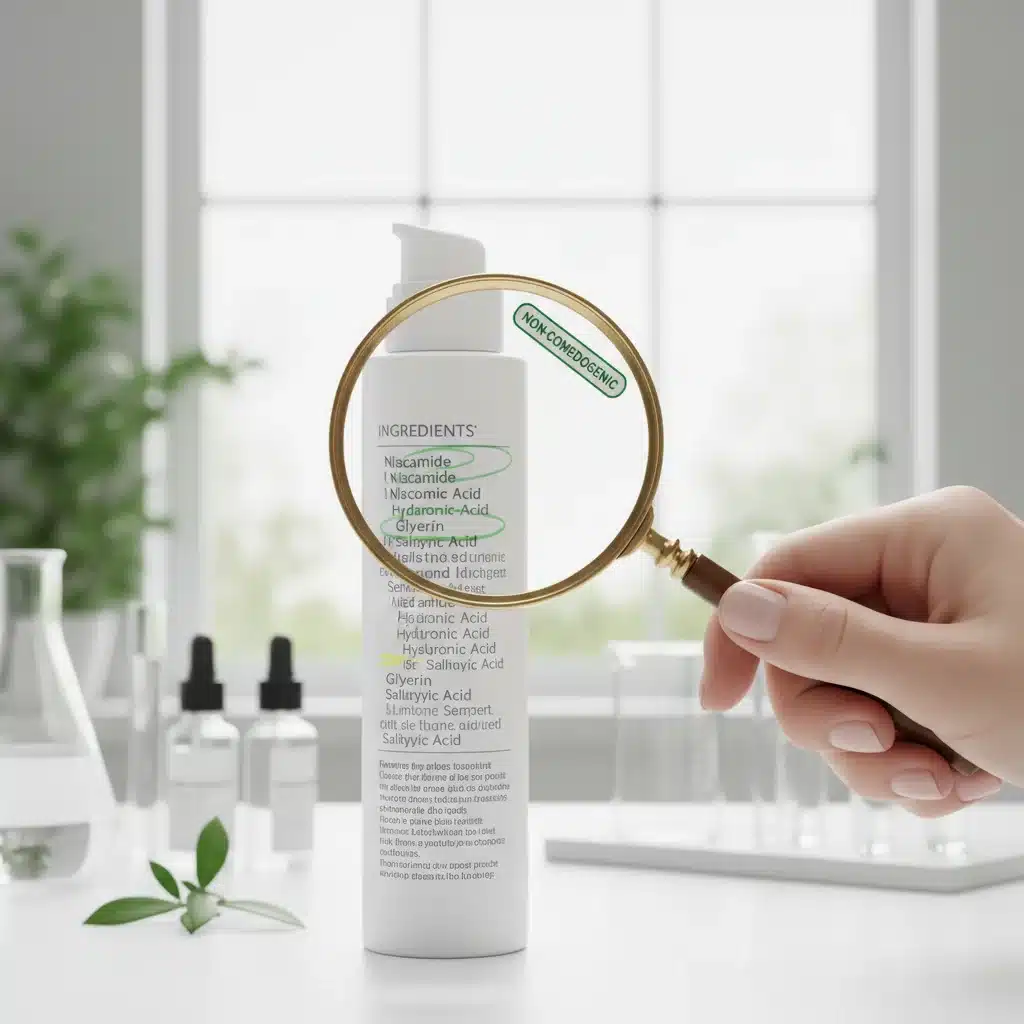
Since the ‘non-comedogenic’ label isn’t always a definitive guarantee, becoming adept at reading ingredient lists is your most powerful tool in your non-comedogenic skincare guide journey. While individual skin reactions can vary, certain ingredients are more notorious for their pore-clogging potential.

Common High-Comedogenicity Offenders (to be wary of):
- Heavy Oils and Butters:
- Coconut Oil: Despite its popularity, coconut oil is highly comedogenic for many individuals.
- Cocoa Butter: Often found in rich moisturizers, it can be problematic for acne-prone skin.
- Linseed Oil (Flaxseed Oil): Can be an issue for some.
- Wheat Germ Oil: High in vitamins, but also high on the comedogenic scale.
- Algae Extracts: Various forms of algae extract have been noted for their potential to clog pores.
- Lanolin and its Derivatives:
- Acetylates Lanolin: A common culprit.
- Ethoxylated Lanolin: Another derivative to watch out for.
- Certain Waxes:
- Candelilla Wax: Can be problematic.
- Carnauba Wax: Another wax that might contribute to clogs.
- Specific Esters and Fatty Acids:
- Isopropyl Myristate: A very common ester used as an emollient, but highly comedogenic for many.
- Isopropyl Palmitate: Similar to isopropyl myristate.
- Myristyl Myristate: Often found in creams and lotions.
- Stearic Acid: While naturally occurring in skin, high concentrations in products can be an issue for some.
- Artificial Colors and Fragrances: While not directly comedogenic, these can be irritating to sensitive skin, leading to inflammation that can indirectly contribute to breakouts.
Generally Safe (Low-Comedogenicity) Ingredients:
- Lightweight Oils:
- Squalane: Derived from olives or sugarcane, it’s very skin-compatible and non-comedogenic.
- Jojoba Oil: Mimics skin’s natural sebum, making it well-tolerated.
- Sunflower Oil: Generally considered safe.
- Hemp Seed Oil: Known for its anti-inflammatory properties and low comedogenicity.
- Humectants:
- Hyaluronic Acid: A hydration powerhouse that doesn’t clog pores.
- Glycerin: A ubiquitous and safe humectant.
- Silicones (most forms):
- Dimethicone: Forms a breathable barrier without clogging.
- Cyclopentasiloxane: Another common and generally safe silicone.
- Aloe Vera: Soothing and rarely comedogenic.
- Niacinamide (Vitamin B3): Great for skin barrier health and reducing inflammation, non-comedogenic.
Pro Tip for 2026: Utilize online ingredient checkers and databases. Websites and apps exist where you can paste an ingredient list, and they will highlight potentially comedogenic ingredients based on compiled research. Remember, these are guides, not absolute rules, as individual skin chemistry plays a role.
Building a Non-Comedogenic Skincare Routine for 2026
A truly effective non-comedogenic skincare guide isn’t just about avoiding bad ingredients; it’s about embracing a holistic approach to skin health. Here’s how to construct a routine that supports clear pores and a healthy complexion.
1. The Gentle Cleanse
Start with a gentle, non-foaming cleanser. Harsh cleansers can strip the skin of its natural oils, triggering it to produce more sebum, which can ironically lead to more clogged pores. Look for cleansers labeled ‘non-comedogenic’ and ‘sulfate-free’.
2. Targeted Treatments (When Needed)
For those prone to breakouts, incorporating targeted treatments can be highly beneficial. Ensure these are also non-comedogenic:
- Salicylic Acid (BHA): A lipid-soluble exfoliant that can penetrate oil and exfoliate inside the pore, helping to prevent and treat comedones.
- Benzoyl Peroxide: Kills acne-causing bacteria and helps shed dead skin cells.
- Retinoids (Retinol, Tretinoin, Adapalene): Excellent for increasing cell turnover, preventing dead skin cells from accumulating and clogging pores. Adapalene is particularly well-regarded for its efficacy in treating comedonal acne with a good tolerability profile.
- Niacinamide: Reduces inflammation, improves skin barrier function, and can help regulate oil production.
3. Hydration is Key (Even for Oily Skin)
Many people with oily or acne-prone skin mistakenly believe they don’t need moisturizer. This is a myth! Dehydrated skin can produce more oil to compensate, worsening the problem. Choose a lightweight, gel-based or fluid moisturizer that is explicitly labeled ‘non-comedogenic’ and ‘oil-free’. Ingredients like hyaluronic acid, glycerin, and squalane are excellent choices.
4. Sun Protection: Non-Negotiable
Sunscreen is crucial for everyone, but especially for those using acne treatments that can increase photosensitivity. Look for mineral sunscreens (zinc oxide, titanium dioxide) or chemical sunscreens that are formulated to be non-comedogenic. Many modern sunscreens now offer lightweight, non-greasy finishes perfect for acne-prone skin.
5. Makeup and Other Cosmetics
Don’t forget that makeup, primers, and even hair products can be sources of comedogenic ingredients. Always opt for foundations, concealers, and blushes that are labeled ‘non-comedogenic’ or ‘non-acnegenic’. Regularly clean your makeup brushes to prevent bacterial transfer.
Beyond the Label: Personal Skin Reactions and Patch Testing
While a non-comedogenic skincare guide is incredibly helpful, it’s vital to remember that skincare is deeply personal. What works for one person may not work for another, even if both have similar skin types. This is due to individual variations in skin chemistry, sensitivities, and environmental factors.
The Importance of Patch Testing
Whenever you introduce a new product into your routine, especially if you have sensitive or acne-prone skin, perform a patch test. Apply a small amount of the product to an inconspicuous area of your skin (e.g., behind the ear, on the jawline, or a small patch on your inner arm) for several days. Observe for any redness, itching, irritation, or breakouts before applying it to your entire face.
Listen to Your Skin
Ultimately, your skin is the best indicator. If a product claims to be non-comedogenic but consistently causes you to break out, it’s not working for your skin. Don’t be afraid to discontinue use and try something else. Keep a skincare journal to track new products and any reactions, helping you identify patterns.
The Future of Non-Comedogenic Skincare in 2026 and Beyond
The skincare industry is constantly innovating, and the focus on non-comedogenic formulations is only intensifying. Here’s what we can expect in the coming years:
Increased Transparency and Regulation
Consumer demand for clarity is pushing brands towards more transparent ingredient sourcing and rigorous testing. While a universal standard for ‘non-comedogenic’ may still be some way off, we can anticipate more detailed information from brands about their testing methodologies and results.
Microbiome-Friendly Formulations
The understanding of the skin microbiome – the community of microorganisms living on our skin – is rapidly advancing. Future non-comedogenic products will likely incorporate prebiotics, probiotics, and postbiotics to support a healthy skin barrier and balance the skin’s ecosystem, further preventing breakouts without harsh ingredients.
Personalized Skincare Solutions
AI and genetic testing are paving the way for hyper-personalized skincare. Imagine products formulated specifically for your unique genetic predispositions and skin microbiome, ensuring they are perfectly non-comedogenic for you. While still in its nascent stages, this is a promising area for the future of skincare.
Sustainable and Ethical Choices
The demand for non-comedogenic products will also converge with the broader trend towards sustainable and ethically sourced ingredients. Brands will be challenged to create effective, pore-friendly formulations that also meet environmental and social responsibility standards.
Conclusion: Empowering Your Skincare Choices with a Non-Comedogenic Skincare Guide
Navigating the world of ‘non-comedogenic’ claims can feel like a labyrinth, but armed with the insights from this non-comedogenic skincare guide, you are now better equipped to make smart choices for your skin in 2026. Remember these key takeaways:
- The ‘non-comedogenic’ label is a helpful indicator, but not an absolute guarantee. Always cross-reference with ingredient lists.
- Educate yourself on common comedogenic ingredients. Knowledge is power.
- Prioritize a gentle, consistent skincare routine that includes cleansing, targeted treatments, moisturizing, and sun protection, all with non-comedogenic products.
- Listen to your skin. Your individual reaction is the ultimate test.
- Stay informed about emerging trends in skincare for continued skin health.
By adopting a proactive and informed approach, you can significantly reduce the risk of clogged pores and breakouts, paving the way for the clear, radiant skin you deserve. Embrace the journey to better skin with confidence, knowing you have the tools to decipher the claims and select products that truly work for you.