Hyaluronic Acid 2026: Unveiling Multi-Layered Skincare Benefits

Hyaluronic Acid 2026: Unveiling Multi-Layered Skincare Benefits
In the ever-evolving landscape of skincare, certain ingredients stand the test of time, proving their efficacy and versatility. Among these, hyaluronic acid (HA) reigns supreme, consistently lauded for its unparalleled hydrating properties. As we look towards 2026, the understanding and application of hyaluronic acid continue to expand, revealing even more profound and multi-layered benefits for skin health and aesthetics. This comprehensive guide will delve deep into the science behind this miraculous molecule, explore its diverse applications, and highlight why understanding the nuances of hyaluronic acid benefits is crucial for achieving truly radiant and resilient skin in the years to come.
The Enduring Power of Hyaluronic Acid: A Scientific Deep Dive
To truly appreciate the multi-faceted hyaluronic acid benefits, we must first understand its fundamental nature. Hyaluronic acid is a naturally occurring glycosaminoglycan found throughout the body’s connective tissues, with the highest concentrations in the skin, eyes, and joints. Its primary function is to retain water, and it does so with remarkable efficiency. A single molecule of HA can hold up to 1,000 times its weight in water, making it an extraordinary humectant. This incredible water-binding capacity is what gives HA its unique ability to plump the skin, reduce the appearance of fine lines and wrinkles, and impart a youthful, dewy glow.
The Molecular Marvel: How HA Works
At a microscopic level, hyaluronic acid forms a viscoelastic solution in the skin, creating a cushioning and lubricating effect. This not only keeps the skin hydrated but also supports its structural integrity. Think of it as a natural sponge within your skin, continuously drawing moisture from the environment and deeper skin layers to the surface, where it’s most needed. This constant hydration is vital for maintaining the skin barrier function, which acts as the first line of defense against environmental aggressors, pollution, and pathogens.
Beyond simple hydration, HA plays a crucial role in cellular communication and tissue repair. It helps transport essential nutrients to skin cells and aids in the removal of waste products. This contributes to a healthier cellular environment, promoting faster healing and regeneration. The presence of adequate HA levels is also linked to increased collagen and elastin production, two proteins essential for skin elasticity and firmness. As we age, our natural production of hyaluronic acid declines, leading to drier skin, loss of volume, and the formation of wrinkles. This is precisely why topical application and, in some cases, internal supplementation of HA have become cornerstones of modern anti-aging skincare.
Beyond Hydration: Unpacking the Multi-Layered Hyaluronic Acid Benefits in 2026
While hydration remains the most recognized of the hyaluronic acid benefits, advanced research and formulation techniques in 2026 have unlocked an even broader spectrum of positive effects. These benefits extend from immediate cosmetic improvements to long-term dermatological health.
1. Superior Hydration and Moisture Retention
This is the cornerstone of HA’s appeal. By drawing and holding water, hyaluronic acid dramatically improves skin hydration levels. This doesn’t just make the skin feel softer; it also makes it appear smoother, plumper, and more supple. Consistent hydration is critical for all skin types, even oily skin, as dehydration can paradoxically trigger increased oil production.
2. Visibly Reduced Fine Lines and Wrinkles
The plumping effect of HA directly contributes to a reduction in the appearance of fine lines and wrinkles. As the skin becomes more hydrated and voluminous, superficial lines are smoothed out, creating a more youthful and even texture. This is a significant anti-aging benefit that makes HA a staple in many age-defying formulations.
3. Enhanced Skin Elasticity and Firmness
By promoting a well-hydrated environment, hyaluronic acid supports the health and function of collagen and elastin fibers. While HA doesn’t directly create these proteins, its role in maintaining optimal skin conditions indirectly contributes to improved elasticity and firmness over time. This leads to skin that feels more resilient and less prone to sagging.
4. Strengthened Skin Barrier Function
A healthy skin barrier is paramount for protecting the skin from environmental stressors, allergens, and irritants. Hyaluronic acid helps to reinforce this barrier by ensuring the skin cells are adequately hydrated and tightly packed. A robust barrier means less transepidermal water loss (TEWL) and better protection against external aggressors, leading to less sensitivity and irritation.
5. Soothing and Calming Properties
For sensitive or irritated skin, hyaluronic acid can provide significant relief. Its gentle nature and hydrating capabilities help to soothe redness and inflammation, making it an excellent ingredient for post-procedure care or for individuals prone to sensitivities. It helps to restore comfort and balance to compromised skin.
6. Accelerated Wound Healing and Repair
Beyond daily skincare, HA has recognized medical applications in wound healing. It plays a vital role in all phases of wound repair, from inflammation to tissue remodeling. In skincare, this translates to aiding in the recovery of minor skin abrasions, post-acne marks, and overall skin regeneration, contributing to a clearer and healthier complexion.
7. Antioxidant Defense (Indirect)
While not a direct antioxidant, hyaluronic acid can indirectly support the skin’s defense against free radical damage. By maintaining a strong skin barrier and promoting optimal cellular function, it helps the skin to better withstand oxidative stress from pollution and UV radiation. Some advanced HA formulations may also incorporate direct antioxidants for a synergistic effect.
The Nuance of Molecular Weight: Maximizing Hyaluronic Acid Benefits
One of the most significant advancements in understanding hyaluronic acid benefits in recent years has been the recognition of molecular weight. Not all hyaluronic acid is created equal, and its size dictates how it interacts with and penetrates the skin.
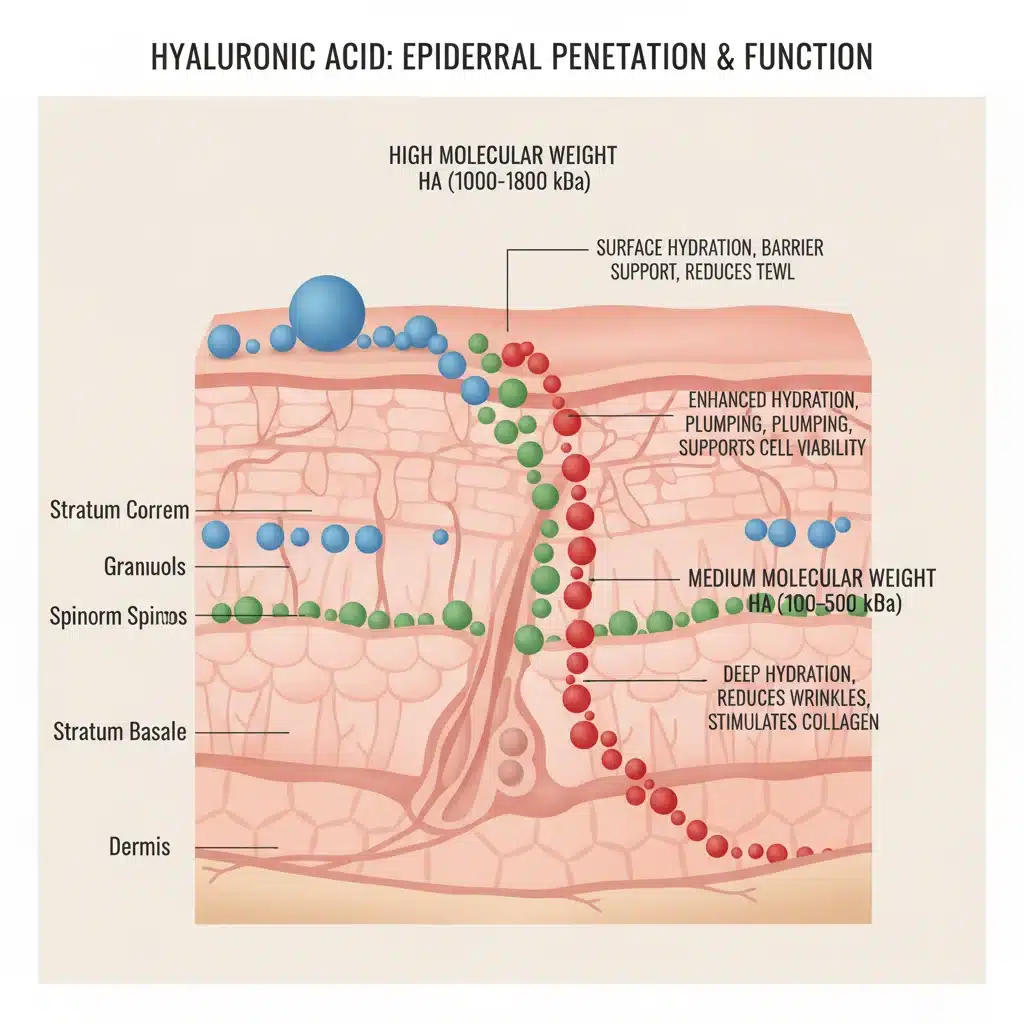
High Molecular Weight (HMW-HA)
- Characteristics: Larger molecules that sit on the skin’s surface.
- Benefits: Forms a hydrating film, preventing transepidermal water loss, providing immediate surface hydration, and creating a smooth, plump feel. Excellent for creating a protective barrier.
- Application: Often found in thicker serums and creams for surface-level hydration and barrier support.
Medium Molecular Weight (MMW-HA)
- Characteristics: Slightly smaller than HMW-HA, allowing for slightly deeper penetration.
- Benefits: Offers a balance of surface hydration and some penetration into the upper epidermis, providing sustained moisture and improving skin elasticity.
- Application: Commonly used in a wide range of serums and moisturizers to deliver broad hydrating effects.
Low Molecular Weight (LMW-HA) and Hydrolyzed Hyaluronic Acid
- Characteristics: Fragmented, smaller molecules that can penetrate deeper into the epidermis.
- Benefits: Provides deeper hydration, promoting cellular communication, stimulating the skin’s natural HA production, and offering more pronounced anti-aging effects by working at a deeper level to plump from within.
- Application: Ideal for targeted anti-aging treatments, serums designed for deeper hydration, and formulations aiming for long-term skin health improvements.
In 2026, premium skincare formulations often employ a multi-molecular weight approach, combining different sizes of HA to deliver comprehensive hydration and maximize the full spectrum of hyaluronic acid benefits across all layers of the epidermis. When choosing products, look for terms like ‘multi-molecular hyaluronic acid’ or ‘hydrolyzed hyaluronic acid’ to ensure you’re getting a well-rounded HA experience.
Integrating Hyaluronic Acid into Your 2026 Skincare Routine
Harnessing the full potential of hyaluronic acid benefits requires proper integration into your daily skincare regimen. Its versatility means it can be used by almost everyone, regardless of skin type or concern.
Best Practices for Application
- Apply to Damp Skin: This is perhaps the most crucial tip. Since HA is a humectant, it draws moisture. Applying it to damp skin (after cleansing and toning) gives it an immediate source of water to bind, preventing it from potentially drawing moisture from deeper skin layers in very dry environments.
- Layering is Key: HA serums typically go on after cleansing and toning, but before heavier creams or oils. This allows the HA to effectively penetrate and hydrate the skin before other ingredients lock in that moisture.
- Follow with an Occlusive/Emollient: To seal in the hydration provided by HA, always follow with a moisturizer or facial oil. This creates a protective barrier that prevents the bound water from evaporating, ensuring long-lasting hydration.
- Consider Your Environment: In extremely dry climates, HA might need extra support. If you notice your skin feels tighter after using HA, ensure you’re applying it to damp skin and immediately following with a rich moisturizer. A humidifier in your home can also help.
HA in Different Product Forms
- Serums: The most popular form, offering concentrated doses of HA. Often contain various molecular weights for multi-depth benefits.
- Moisturizers: Many creams and lotions incorporate HA for enhanced hydration and plumping alongside other beneficial ingredients.
- Masks: Sheet masks and overnight masks infused with HA provide an intense burst of hydration, ideal for a quick pick-me-up or targeted treatment.
- Cleansers and Toners: While less common for significant HA benefits due to rinse-off nature, some formulations include HA to prevent stripping the skin of its natural moisture.
- Injectables (Dermal Fillers): Medical-grade HA is used in cosmetic procedures to restore volume, fill deep wrinkles, and augment features, offering immediate and dramatic results. This is a different application from topical skincare but highlights HA’s profound impact.
The Future of Hyaluronic Acid: Innovations and Trends in 2026
The journey of hyaluronic acid in skincare is far from over. As we step into 2026, several exciting innovations and trends are shaping how we harness hyaluronic acid benefits.
Bio-Fermented HA and Sustainable Sourcing
Consumer demand for ethical and sustainable products is driving innovation in HA production. Most cosmetic HA is now produced through bio-fermentation (using bacteria to synthesize HA), which is a more sustainable and ethical alternative to animal-derived sources. Expect to see even more transparency and certifications around sustainable sourcing in 2026.
HA in Combination Therapies
Formulators are increasingly combining HA with other powerhouse ingredients to create synergistic effects. Think HA paired with:
- Niacinamide: For barrier repair, pore refinement, and hydration.
- Vitamin C: For antioxidant protection, brightening, and collagen support alongside hydration.
- Peptides: For enhanced anti-aging, promoting firmness and elasticity.
- Ceramides: For superior barrier repair and moisture retention, especially for dry or compromised skin.
Targeted Delivery Systems
Advanced encapsulation and delivery technologies are emerging to ensure HA reaches its intended targets within the skin more effectively. These systems can protect HA from degradation and optimize its penetration, maximizing its therapeutic effects.
Personalized Skincare with HA
The rise of personalized skincare means HA formulations will become even more tailored to individual skin needs. AI-powered diagnostics and custom compounding services will allow consumers to get HA products optimized for their specific skin type, concerns, and even environmental conditions.
Common Misconceptions About Hyaluronic Acid
Despite its popularity, some myths and misunderstandings still surround hyaluronic acid. Let’s debunk a few to ensure you’re making informed choices about maximizing hyaluronic acid benefits.
Myth 1: HA is an Exfoliant.
Fact: Hyaluronic acid is a humectant, meaning it attracts and holds moisture. It is not an alpha hydroxy acid (AHA) or beta hydroxy acid (BHA) and does not exfoliate the skin. Its smoothing effect comes from plumping the skin with hydration, not by shedding dead skin cells.
Myth 2: More HA is Always Better.
Fact: While beneficial, high concentrations of HA (especially high molecular weight) can sometimes feel sticky or pill on the skin. Furthermore, in extremely dry environments without an occlusive layer, HA can theoretically draw moisture from the skin itself. A balanced formulation with multiple molecular weights and proper layering is key.
Myth 3: HA is Only for Dry Skin.
Fact: Absolutely not! All skin types, including oily and acne-prone skin, can benefit from HA. Oily skin can still be dehydrated, leading to increased oil production. HA provides lightweight, non-comedogenic hydration that helps balance oil production and support a healthy barrier without clogging pores.
Myth 4: Topical HA is as Effective as Injectable HA.
Fact: Topical hyaluronic acid works on the surface and within the epidermis to hydrate and plump. Injectable HA (dermal fillers) uses medical-grade, cross-linked HA to restore volume, fill deep wrinkles, and augment features at a much deeper, subcutaneous level. While both offer hyaluronic acid benefits, their mechanisms and results are distinctly different.
Choosing the Right Hyaluronic Acid Product for You
With an abundance of HA products on the market, selecting the right one can feel overwhelming. Here’s what to consider to ensure you’re getting the most out of hyaluronic acid benefits:
- Ingredient List: Look for ‘Sodium Hyaluronate’ (the salt form of HA, which has a smaller molecular weight and is more stable) or ‘Hydrolyzed Hyaluronic Acid’ for deeper penetration, alongside ‘Hyaluronic Acid’ for surface hydration.
- Concentration: While there’s no official standard, a concentration of 0.5% to 2% HA is generally effective in serums. Higher concentrations don’t necessarily equate to better results and can sometimes lead to stickiness.
- Additional Ingredients: Consider what other ingredients are paired with HA. If you have sensitive skin, opt for simpler formulations. For anti-aging, look for peptides or antioxidants. For barrier repair, ceramides or niacinamide are excellent companions.
- Texture and Feel: HA products come in various textures, from watery essences to thicker gels. Choose one that suits your skin type and preferences, and that layers well with the rest of your routine.
- Brand Reputation and Reviews: Research reputable brands known for their transparency and effective formulations. Read reviews from individuals with similar skin concerns.
Conclusion: Hyaluronic Acid – A Skincare Essential for 2026 and Beyond
As we navigate the complexities of modern skincare, hyaluronic acid remains an indispensable ingredient. Its unparalleled ability to hydrate, plump, and protect the skin makes it a cornerstone for maintaining a healthy, youthful, and resilient complexion. In 2026, with advancements in molecular understanding, sustainable sourcing, and innovative delivery systems, the multi-layered hyaluronic acid benefits are more accessible and potent than ever before.
By understanding the science behind HA, appreciating the role of different molecular weights, and integrating it correctly into your routine, you can unlock a new level of skin health and radiance. Whether you’re seeking to combat dryness, smooth fine lines, or simply maintain optimal skin vitality, hyaluronic acid is a versatile and powerful ally in your skincare arsenal. Embrace the enduring power of HA and witness the transformative difference it can make for your skin, not just today, but for years to come.